Thursday, April 11, 2013

It's All in the Packaging

Going grocery shopping has always been something that I enjoyed to do. However, only recently have I started to pay attention to the actual products and how they are being sold. I mean, you can't blame me. It is so easy to just stroll into a store, particularly Whole Foods, and instantly become captivated by the plethora of fruits, vegetables, artisan soaps and snacks that they are selling. It was enough to distract me from actually considering why products are sold in the fashion that they are and how that indicates something about American culture.

The first question I had to answer was "What makes Whole Foods products so enticing?". I truly do not believe that I am the only one who finds Whole Foods somewhat more exciting than the conventional supermarket. But why? What I realized was that it has to do with how everything appears...how everything is packaged. First, I walk in and see an array of vibrant fruits and vegetables, perfectly stacked with signs reading "Oranges from Spain" or "Organic Strawberries". Then, moving further into the store, the consumer is bombarded by beautifully packaged breads and cartons of eggs, each with a heartfelt story that often takes the reader on a beautiful journey about how that item was produced. Are you beginning to see where I'm going here? It's not the actual food that is mesmerizing, it's the experience, the packaging and the aesthetics. 

The first time I had heard about this concept was while reading an excerpt from a book called The Omnivore's Dilemma by Michael Pollan. Pollan spoke a lot about how grocery shopping has become more of a literary experience, where individuals choose items based more upon their connection to a product's "story" and its appearance, rather than just the type of food itself. While I was initially skeptical, the more I thought about this concept, the more I began to believe it. 

Whole Foods does really go out of its way to give customer's a great experience, from the overall appearance of the store to the little messages they put on their baked goods. It seems like customers, including myself, are beginning to pay more attention to the aesthetics rather than the actual products. While this is, in some ways, a somewhat cool shift, it also poses some serious concerns. For example, if we are becoming so mesmerized by the stories companies write about their food and getting caught up in this sort of fantasy, aren't we ignoring the realities of food production? What I mean is that even though there may be a beautifully written story on a milk carton about how happy the cow that produced the milk was or how nice the farm was, do we believe that? Companies are still often big businesses and will do whatever they want to make a sale. So those beautiful stories are often exaggerations of what is really going on. And how about meat? Meat-producing companies are becoming increasingly conscious of how they package and advertise their food...often to distract from the actual production of the meat that they are selling. It seems like sometimes, people will get so caught up in the advertising, that they forget about the realities of mass food production, which often include cruelty, huge factories, and messy slaughter. So, while it's often a refreshing experience to enjoy all the distractions Whole Foods has to offer (trust me, I love it!), it's also important for consumers to remember that the aesthetics and appearances are usually airbrushed.


Tuesday, April 2, 2013

A New Lens for the Microscope

Compelling characters are often the backbone of good novel. While many observations about the individuals within a novel can be made just by reading the novel casually, critical lenses are always helpful to bring in fresh perspectives. Having recently read Hamlet by William Shakespeare, I was able to thoroughly explore the feminist lens. With this lens essentially exploring how certain authors, especially male authors, represent women in novels, I was essentially able to look at the female characters in a completely new light. How are these women really portrayed?

The feminist lens certainly reveals something interesting: women often appear differently in books than men do. This doesn't even hold true exclusively in literature; almost all forms of media display this. Women are constructed differently. For example, it has been a common dispute in past years regarding women being displayed as the "damsel in distress, always needing the male figure to come save her. While this may not seem like a big deal, I've started to realize how prevalent this is. Countless children's books and fairy tales embodying the same preset: the idea, as feminist critics say, that the women are represented as the "other" or the "lacking" individual. They are often the oppressed ones, the ones stuck at home performing chores, or creating some sort of inconvenience that must be resolved by their male counterpart. By growing up around these stories, it sets a certain standard in which society views women, which subconsciously stays in an individual's brain as they grow up. The feminist lens, when this individual grows up, can then help them answer the questions: Why are women always looking a certain way? Why are women appearing in the same fashion...doing the same things?

Instead of taking the portrait painted of women in novels and films so literally, the feminist lens allows the reader or viewer to delve deeper into the reasoning of why the woman was painted that way. Particularly, the upbringing of the author, the circumstances or societal norms may have dictated how the author portrayed the woman in the novel, exposing questions about the stature of women in society at that time as well. The feminist lens's ability to explore women's roles in a given work as well as tie that to the role of women in society either currently or during the author's time period certainly provides a well-rounded and in-depth look at a certain topic. Additionally, it helps paint a more detailed picture of women and their role in novels and works of art and media, making it a valuable lens for a reader or viewer.

Thursday, March 21, 2013

What Universities do to Stay "Beautiful"

6.3%...7.2%....9.7%....it's acceptance rates like these that, perhaps embarrassingly, make prospective students and interested researchers alike gasp and blush. Universities know that these prestigious, exclusive numbers are marveled over time and time again, making the necessity to uphold them quite strong. Reading these microscopic values previously led me to the conclusion "Well, schools like Harvard and Stanford...they're just selective. They know who they want and they pick wisely!" A couple students cherry-picked to attend and a herd of hopeful students denied. 

However, as I got my first college decision, I opened it to read what essentially led to "wait-listed". I had heard about some of my other friends receiving the same sort of decision and feeling happy about it, as in, they were happy it wasn't a rejection and maybe there was hope. I, on the other hand, wasn't as thrilled. I couldn't feel happy nor could I feel sad. It was a massive question mark. Upon hearing more about students getting "wait-listed" than rejected or accepted, I decided it was time to find out why the wait-list has become so attractive. Is it a real sign of hope or something else?

Well, as I had expected, the infamous wait list isn't as hopeful as it seems. An article from the Wall Street Journal described it as schools wanting to "pad their wait list". Sure, a prospective student may be put on there because they definitely piqued an admissions officer's interest in some way or because they were truly very close to getting a spot, however when a school is wait-listing hundreds, even thousands of applicants, you start to wonder what their intentions are. For example, one can look at Johns Hopkins waiting list of approximately 2700 kids and true freshman class size of about 1200 kids question if they're really that indecisive or if they are just trying to stay beautiful. And for them, beautiful means exclusive.

Personally, I would rather receive a definite yes or a no from colleges. However, I understand that sometimes space clears up and a wait list is helpful to have. That being said though, it's frustrating to think that a handful of the most prestigious universities are simply trying to "beat the system" in order to keep their acceptance rates low. Would colleges lose their prestige if their acceptance rates began to creep up? As much as I want to think they wouldn't, I honestly would probably assert that our system does value the rates....perhaps a bit too much. 


Tuesday, March 19, 2013

Life Illustrated

Art is one of the most popular ways to express the appearance of and feelings associated with a certain idea, setting or object. However, art's appearance throughout time also indicates aspects of the culture surrounding it. The intricacy, the strokes, the themes seen in art offer viewers an understanding of what individuals during certain time periods valued.

Compare Renaissance Art, which was very detailed, scenic, and intricate, with the more recent Modern Art, which is more thought-provoking, raw and risky. While these characteristics are seen in the actual painting itself, this appearance also reveals something about what society was life during the Renaissance Era or during the early 20th century. For example, the shift to more thought-provoking and risky art during the early 20th century expresses the struggle of artists during this time to revive the popularity of art. By inserting more subliminal messages and controversial ideas, artists were clearly trying to have viewers foster more of a connection with art and gain more meaning from the paintings.

With the "look" of art always shifting alongside societal changes, I decided to explore an art trend that has become a huge trend in our modern culture - pop art. Though it isn't a particularly new concept, pop art has been showing up more and more in exhibits and as inspiration for prominent design companies, such as Vogue. When comparing classic pop art to a painting like "School of Athens" by Raphael Sanzio, it's pretty obvious that there has been a shift in what artists are looking to convey.

While analyzing these examples of modern pop art on the left, some conclusions can be drawn. Pop art is often colorful, loud and formatted like a mirage of many prints, patterns and textures. Many examples of pop art, like the example on the top left, also include references to the media or pop culture. Popular lingo, well-known brands, celebrities... more than any other type of art, pop art truly plays with pop culture and societal norms.

So what does the popularization of pop art illustrate about our culture? Personally, I would say that it shows our interest and inextricable connection to current pop culture. Not only is that seen in how artists are inspired to create pop art but also the amount of interest in viewing this type of art and recreating it. Our culture is so influenced by the media that is reflecting in our artists' illustration of our life and interests. Though pop art is certainly unique compared to many of the other artistic trends that have developed throughout time, however it shows an interesting sense of change. It shows our ousting of the old and interest in starting with something fresh...something new. Even more than that, it shows that we are conscious of the influence of media and pop culture, and that we can use art to express and critique it.

Tuesday, February 26, 2013

The Pageant Craze

Beauty pageants have been a popular pastime for decades, however in this day and age, pageants have grown to be so much more than what they used to be. Nearly everyone I know has watched the TLC show Toddlers & Tiaras or heard about the newly popular toddler beauty pageants. Essentially, the new trend is not to enroll toddlers in summer camps or sign them up for ballet or baseball, but to sign them up for beauty contests.

With hundreds of competitions around the country, children can be enrolled into pageants practically at birth, as the youngest division is 0-11 months old. While there are natural pageants (usually forbid makeup, hair extensions, etc), glitz pageants, which include choreographed routines and look favorably upon big hair, fake teeth, sparkly gowns and nail extensions, are the most popular. Children can compete for a variety of prizes, ranging from money to massive trophies or electronics. Toddlers & Tiaras, which is one of the more commonly recognized shows about toddler beauty pageants, exposes the realities of what the children and families committed to these pageants actually go through.

As innocent and adorable as Toddlers & Tiaras may sound, the controversies connected to these pageants have gained nearly as much attention as the show itself. From giving a child an energy drink mix before going onstage to forcing a child to get her eyebrows waxed to gain points, it seems that some individuals don't have limits when it comes to beauty. When is it too much? Why are there so many parents who seem perfectly content with altering their own child until they seem "flawless"...just for a trophy or some cash?

One of the most disturbing stories I've heard regarding toddler beauty pageants involved a mother who gave botox injections and leg waxing on her 8-year-old daughter. As the article asked, how young is too young? If an individual wants to do these things to themselves when they are old enough to make their own decisions, then so be it. However, it's frightening to think that a mother would allow her daughter, whether she wanted it or not, to get these things done just so that she would be better prepared for a pageant. Clearly this is a recurring thing, which leads me to believe that the beauty pageant system is flawed. Beauty pageants have the potential of being fun and appropriate, however if to win, a child is advised to have fake extensions, fake teeth, a spray tan, an expensive costume, and a lot of makeup...what is that saying about what our society values?

Appearance is important to people; that will likely be true for a long time. However a line must be drawn somewhere. When someone is old enough to make their own decisions and decides that they would like to participate in a beauty pageant, then they can pursue that. Forcing children to do these pageants while altering their natural beauty in the process is a different story. With beauty and makeup already playing such a strong role in our culture today, is it necessary to start exposing children to this specific lifestyle so early? If a child wants to enroll in a beauty pageant, is it necessary to play to win instead of playing for the experience or for fun?

At some point, when a parent has been applying makeup onto their child for 20 minutes straight or starts spray tanning, injecting or waxing their kid, the child begins to lose the appreciation for their natural beauty and for who they are themselves. If a child grows up thinking that they must be beautified to be rewarded, that sentiment is likely there to stay.

Craving a Diagnosis: Problematic?

Disease is oftentimes considered purely scientific. If an individual feels sick, they can go to their doctor, take some tests and leave with a medically-based diagnosis. Take strep throat- not only can you visibly recognize the appearance of this disease, but you can get a definitive diagnosis by taking a throat culture. If you have it, there's no denying it and you can get medication, feeling secure about your specific prescription. However, not all diseases are so clear. Consider those diseases or disorders that are diagnosed merely by appearance or by vague symptoms, such as ADHD.

ADHD, a neurobehavioral disorder, is diagnosed through a psychiatric assessment. Essentially, information about you is collected, some other diseases must be ruled out, and then you get a diagnosis. There is no blood test or study that can be done to verify your diagnosis, meaning error and over-diagnosis is possible. The possibility of error sounds even more like a reality when you look at the symptoms/criteria associated with ADHD. Some include: difficulty focusing, daydreaming, talking nonstop, impatience. To be quite honest, I've experienced all of these symptoms at some point in my life. However, I wouldn't say that I have ADHD. Neither would many others, apparently, as ADHD is currently considered one of the most over-diagnosed diseases.

Along with depression, bipolar disorder and stress, ADHD has been creating controversy. What could be the main theme here? I would argue that these are all appearance-based diseases or disorders. Because of the lack of lab tests, blood samples, or any type of distinct evidence, they are being diagnosed by appearance (symptoms, trends, etc). Doctors, teachers and parents will look at an individual, study their general being, and come to a conclusion. Sometimes it is accurate- don't get me wrong- and treatment can benefit patients, however it's hard to ignore the fact that ADHD diagnosis among children has increased by 22% in 4 years. Is it possible that this disease, having not even "existed" until the 1990s, has so rapidly spread? Additionally, how can we explain the fact that ADHD has been diagnosed more in certain regions of the United States than others (see chart above)?

Bringing in approximately $3 billion every year to pharmaceutical companies for ADHD medication, I begin to wonder whether or not we are just craving diagnosis. Maybe our culture has begun to over-embrace the idea of diagnosing a disease and treating it with medication. What if these children are just hyper and distracted? What if it's just a phase? What if those characteristics are symptoms for a different, more severe disease? With appearance-driven disorders like ADHD, one cannot be sure. Taking this uncertainty into consideration and recognizing that there are some children taking 119 pills every week for their disorders, it seems necessary to question whether or not it's okay for doctors to so heavily rely on medication for "appearance-based" disorders. Though medication can sometimes help ADHD patients, it also isn't necessary in some cases. In others, the child may even be misdiagnosed.

With all of this in mind, I would say that our society needs to step away from medicine and try to fight off the craving for a diagnosis. We should more thoroughly examine these disorders and diseases and not let the ease of prescribing medication overshadow the complexity of these "appearance-based" disorders. Perhaps more emphasis must be put on lifestyle changes, such as, in the case of ADHD, finding ways to limit distractions or teaching those with the disorder how to naturally subdue their symptoms. Medicine will always be an option, but certainly shouldn't be the convenient way out. Appearance isn't everything and sometimes what may seem like a certain disorder will end up being something completely different. Let's eliminate our urge to label and medicate and take a more thorough look at how we are handling diseases and disorders.

Tuesday, February 12, 2013

Life Exposed

It goes without saying that technology has increasingly influenced our world and lifestyle. In many ways, technology has made life easier on us. Computers, tablets, smart-phones...they connect people around the world, making it easier to communicate, learn about new cultures and hear about current affairs. Only now is it possible to meet someone over the weekend and be able to maintain a relationship with them long after you've parted ways or hear about a natural disaster that happened thousands of miles away within minutes of it happening.

Aside from the conveniences of exposure from new technology, there are considerable inconveniences that have arisen from this "technological revolution". Technology has put us and the world around us on display. The actions we perform are visible. Our appearance is stamped somewhere on the Internet. This makes concerns such as identity theft, online predation, copyright violations and invasion of privacy all the more real.


I am personally an avid user of technology and find it to be quite beneficial to my daily routine. However, has technology left us too exposed? Has our appearance become completely publicized? Unfortunately, it seems as though the Internet privacy scandals have racked up in the past several years. Take the Google Maps Street View scandal or the Instagram privacy scandal as examples. I hear almost constantly on the news stories about an individual finding their photo on a strange website or their personal data being sold to a third party. Some get caught, as Facebook did in 2011 over the Federal Trade Commission's complaint over Facebook's false promises and privacy breaches. However, the FTC cannot catch every scandal, so internet users are falling victim to these sorts of issues daily.

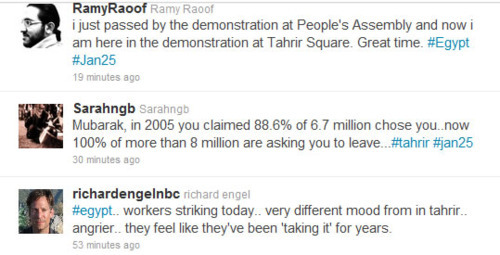
However, to play devil's advocate, there have been some instances in which the exposure of ideas, appearances and events have been helpful. Take the 2011-2012 Egyptian Revolution as an example. This event exemplifies how social media can help the rapid spread of ideas and increase global awareness. The Egyptian citizens took to Facebook, Twitter and other social media outlets to express their anger, which arguably fueled and aided the effort. Otherwise, the convenience of having streaming global news and the ability to hear from individuals all over the world about what is happening to them is powerful.

I'm not afraid to admit that I'm split on the issue of whether or not this technological revolution has been positive or negative. There are clearly two sides to this issues, which is why I'm going to open this up to you all. Has the technological revolution made us too exposed? Are our appearances no longer personal?