Thursday, May 16, 2013

Look Inside the Lab

I wanted to take a break from my broader, more philosophical posts to talk about a serious issue that I am looking to raise awareness about. For the past few months, I've been working on project that was assigned to me which essentially asked students to choose an issue and take an action to help solve it. Initially, I didn't think much of this project and didn't expect to become completely immersed into the issue. However, this changed upon my initial research, and I feel so strongly about this issue that I want to inform my readers.

It's an unfortunate reality that animals are being subjected to inhumane and unnecessary experimentation in research labs, universities and medical schools all around the world. For many taxpayers, their own money is even going to these universities and labs to support this process without them even knowing. Most of these institutions have chosen not to even create a specific policy to prevent cruel treatment of animals and the unnecessary practice of animal experimentation, which means that individuals are left in the dark about what they are doing inside the lab.
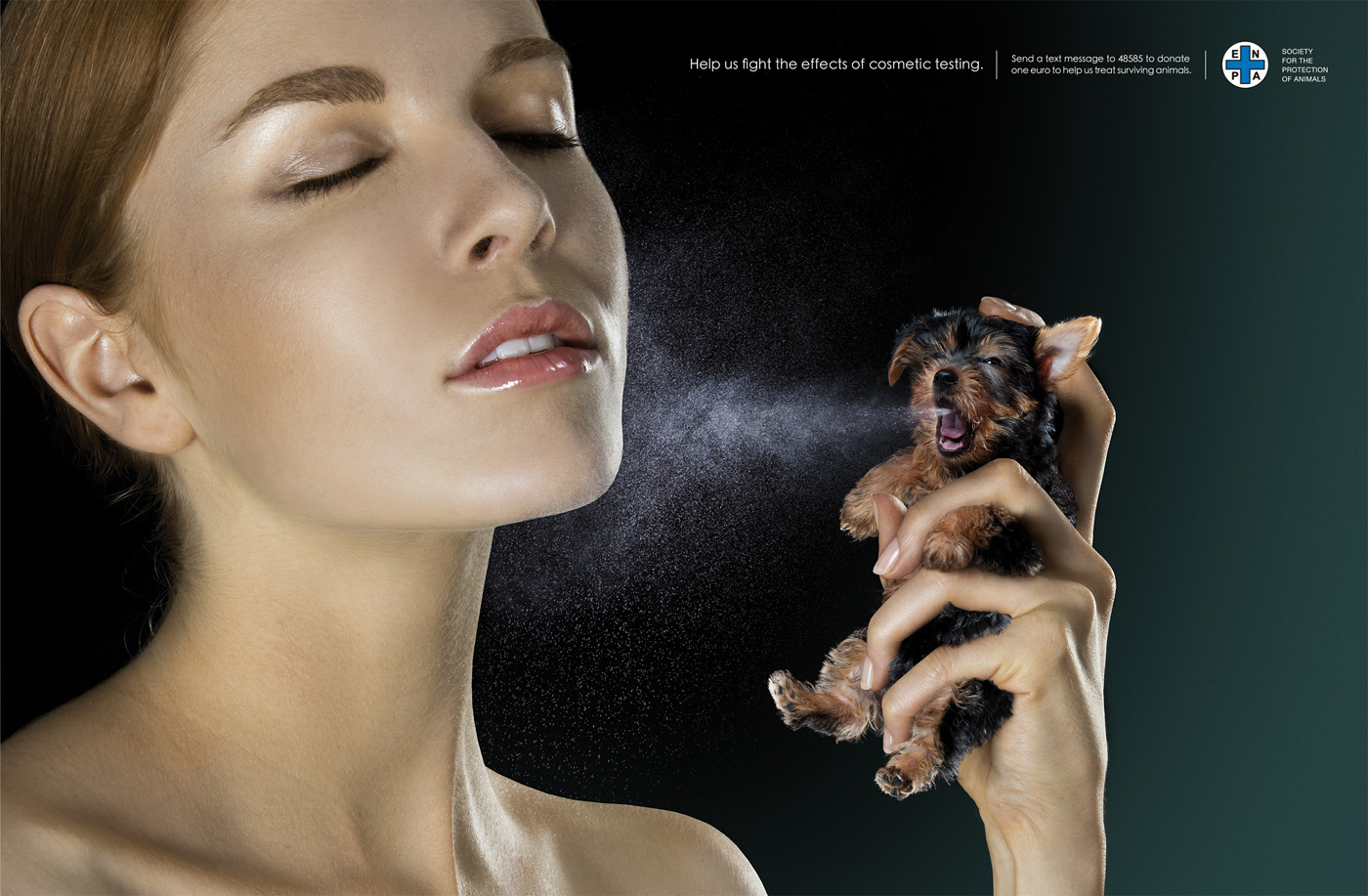
I personally believe that imprisoning animals and performing experiments on them is archaic for these well-established and modern universities and institutions. With the plethora of computer programs, modern techniques and advanced technologies available to us currently, it isn't necessary or even helpful for scientists to experiment on animals. Animal testing is not only inhumane, but also quite unreliable compared to advanced non-animal testing methods. Animal testing lacks scientific value and doesn't progress the knowledge of biology and medicine in a way that non-animal methods of experimentation cannot.

For this reason, I feel that we should all stand together and work to get institutions to develop a clear policy that prohibits severe animal suffering in the lab as well as promote non-animal methods of testing. There are a plethora of ways to get involved , whether it means simply signing a pledge to be cruelty-free, signing petitions, informing friends or family about this issue, raising money for a non-for-profit organization or sending letters to your local university or laboratory to express your discontent. The littlest action can make a huge difference and I believe that if we choose to look inside the lab and recognize the atrocities being committed, then we can tackle this problem and bring justice to animals.


Look Giving and You're Golden

From first grade to eighth grade, my life revolved around Girl Scouts. While the activities associated with Girl Scouts can include selling cookies to win prizes for yourself or taking trips with your troop to spend time with your friends, it wasn't what I spent the most time in Girl Scouts doing. I spent most of my weekends going to retirement homes, helping out at food drives, or raising money for charities. 

I may not be able to speak on behalf of all my fellow troop-members, but that was my favorite part of Girl Scouts. I'm not even kidding you! I sometimes chose not to go to the social events or partake in some of the purely fun activities because that wasn't what I had truly enjoyed as a kid. I actually loved going places and doing good. It was a value that was instilled very early on- clearly- and has surely been carried on into the future. Maybe I'm just naturally one of those people who loves community service, but I have a feeling that my exposure to it early on in life helped create this interest in doing good for others in my community. 

What is saddening to me, though, is the misconception many people have about service learning and volunteer work, especially at my age. For the past several years, it was almost social suicide to not be doing some sort of service project. That awkward silence would arise when someone mentioned their plethora of sports, clubs and leadership activities...but no community service. It just wasn't common. Typically, I would consider this an amazing thing, but I've come to believe that doing community service is common for all the wrong reasons. 

Obviously, merely doing service work, for whatever reason, will have its benefits. However, as someone who truly enjoys community service for what it should be, it's frustrating to see others tarnishing the deed. I don't know how many friends of mine, last year [college application season], involved themselves in regular volunteer work. It was surprisingly very many. While that was exciting to see, I soon realized that these individuals weren't doing this because they suddenly felt compelled to improve the living conditions of those around them. Because unfortunately, as those acceptance letters came pouring in, more and more of my classmates began dropping commitment after commitment. 

Yes, community service and volunteer work has become the classic resumé-builder. It's almost a staple. There's usually a box, on most applications, which request that one lists their community service activities and commitments. It also almost seems like if you aren't doing volunteer work, you're not a good person.

I understand that applications and resumés are important and that one must do what they need to do to get the job, however the obviously selfish utilization of volunteer work for purely personal gain has made all of us teens who actually like service look pretty bad. So maybe it's time to reconsider your run-of-the-mill volunteer work purely as a resumé-builder. In my opinion, everyone has a passion, and if we all took time to find a way to exercise that passion in a way that helps others, it would bring greater benefits than being a cookie-cutter volunteer worker just to look "good". 

Thursday, May 9, 2013

Finale

As things come to a close, I remember back to a quote I brought up in one of my first posts:
"All that glitters, isn't gold". I remember sitting down at the computer, writing that and wondering what that actually means. I even considered...what if this premise, this idea that I've founded my whole blog upon, fails me?

Months later and now feeling that I've gotten a better understanding of what this quote means, I hope that I've offered you, the readers, some ideas to consider. I hope that you too have found an explanation for this quote...or at least reconsidered the implication of appearance in our lives. While I may not continue to post new ideas onto this blog, I think my mission has been complete if I've laid the foundation to consider the role of appearance and aesthetics. From politics, music, art, grocery shopping, and honestly, so much more.. the glitter seems to captivate people more often than not. But the fascination of aesthetics, the glitter in our lives, doesn't always have to influence our decisions. We just have to be conscious about it.

As a college-bound student, I'm thinking more and more about being a smart consumer. While it may not be an obvious part of being a smart consumer, I find that understanding how appearances and, in general, superficiality, affects me. For example, after reading an excerpt in English class of The Omnivore's Dilemma by Michael Pollan and studying the factors that affect what we buy at the supermarket, I began to go grocery shopping with a completely new outlook. I never realized how much the appearance of the food- the packaging- affecting my decisions on what to buy. For a college-bound student, this information was admittedly pertinent to me. I'm going to be shopping on my own in a couple months and will have to be "in tune" with what is going on in my head when I'm making decisions.

I understand that this example may not be pertinent to you, the reader, in particular, and I understand that some of my posts may not have been personally relevant, but I truly believe that the influence of appearance and aesthetics on our decision-making processes and thoughts in general is strong. So my parting words are these: I want this idea to stay in your mind. Whether you're a college-bound student, a job-seeker, a teacher...whatever it is that you are passionate about doing...make appearance/aesthetics another lens that you use to be a smart consumer or even just a more perceptive and curious human being.

Wednesday, April 24, 2013

Blood, Gore, Intestines, Oh My!

This post will be the second in my series of guest blogs. This "Walking Dead"-inspired post is brought to you by Elizabeth, another great blogger, who writes primarily on her blog Wrapped Up In Words. Enjoy! 
_________________________________________________________________________________

Hi everyone! My name is Elizabeth Woo, coming all the way from a blog called Wrapped in Words, to guest blog for Nicole. Take 1.

One thing you should know about me before I begin, is that I am a huge fan of this small, award winning show called “Walking Dead,” maybe you’ve heard of it. While I watch it for its killer (literally) plot, I also watch it for the gore. Despite knowing it’s make-up at its finest, the show uses the gore to realistically create scenarios with all the raw emotions and actions that follow. For example, if an arm needed to be amputated, how would it look? How would it be done? What would be the emotions? Covering up such a scene by cutting directly from one scene where he has two arms to another with one arm, seems a bit like avoiding our own shadow.

However, it turns out that the place we need the truth and reality the most, aka the media, doesn’t provide them. In response to the Boston Marathon bombings, the Daily News published the front page with a large picture of a woman lying in a pool of blood. This was the picture they posted:
Pretty powerful, right? Until Andy Neumann, a sports designer at Gannett’s Louisville Design Studio, thought something was a little off. He was right; Daily News had doctored the picture. Take a look:

As many criticisms for the apparent violation of journalistic principle poured in, I was both upset and yet curious. Why did they erase the gore? Daily News was far from the only newspaper to censor images, the Atlantic and Gawker both opted to censor their pictures. Why? As Charles Apple puts it, “If you can’t stomach the gore, don’t run the photo. Period”.

According to the Observer, the decision to publish the gore was mainly dependent on two questions: Does the gore advance the story? Does the gore infringe on the subjects’ privacy? In the case of gore advancing a story, author Jim Lewis pointed out the dangers of photographs becoming “horror-porn.” In other words, pictures that simply captivated audiences through its gore, without providing important information. On the other hand, after photos of the 2010 Haiti earthquake were published Valerie Payean-Jean Baptiste, a Haitian school teacher, referred to the pictures as a “cruelty,” making money on their pain and suffering.

We live in a society where the culture is deeply embedded in visual censorship. In fact, the New York Times in 2008 noted that, “after five years and more than 4,000 American combat deaths, an exhaustive search led to only a half-dozen photos of dead American soldiers.” While it is important to pay due respect to the ones being photographed, Washington Post Picture Editor Bonnie Jo Mount argues that it might be detrimental for us to not see visuals that we need to see. If we continue to avoid seeing the reality of a situation, there is the risk that we might be misled, misinformed, and in the dark.

In an age when taking photos and sending them halfway around the world can be accomplished in simply 2 button clicks, we must ask ourselves which pictures we decide to share and which pictures we decide not to share.

One Photo Truly Worth a Thousand Words

Today's post features a guest writer, Stephanie, who will examine a truly incredible photo used on the cover the most recent Special Report of TIME Magazine. Feel free to check out her blog for more interesting posts. Also, I will be guest-blogging on another great blog called "The Numbers Don't Lie", so feel free to check that out as well!
_________________________________________________________________________________

Photos and paintings have the power to move us in different ways. They may stir anger, sadness, joy, and even a combination of different emotions. Oftentimes a photographer takes a photo to make a statement or capture an intriguing moment. It is no wonder that people frequently say "A picture is worth a thousand words."

In light of the Boston Marathon explosion, Time Magazine released a special tablet issue. The cover photo shows a close image of a frightened toddler, with blood smeared into his disheveled red hair, being carried by a police officer. It is headlined "Tragedy in Boston." Unlike several other images I have seen after the explosion, this one does not show any open wounds and is not explicitly graphic. Nevertheless, the photo is still emotional. The response to this cover, however, has been mixed. Many have responded that the photo is heartbreaking and moving, while others believe the media has gone too far. 

But it is precisely these types of photos and the reactions they generate that draw public attention. Instead of using a photo of a man/woman on a stretcher or of the explosion itself, Time specifically chose to place a little boy on their cover. His expression clearly depicts terror—a sign that perhaps he will be forever scarred with the moment he just lived through. Some Twitter users stated that the image gives “the bad guys” exactly what they wanted—proof that the explosions could affect not only the people at the marathon, as well as the youngest and most innocent; but also cause the entire nation to stir. 

The appearance and details of a photo tell a story. As I look at the photo, I associate the boy’s messy hair with chaos; the blood on his head with an act of terror or violence; and the police officer with help. I do not need to read a page of text to understand that this event will be historic. The image, in many ways, is a shortcut. 

We live in an increasingly fast-paced society. Personally, I do not have time to stop and read every single current event. However, I do have time to skim through news photos and their captions. A photo will often tell me the gist of the story or and important aspect. By seeing it, I also know whether I want to take more time reading about the situation. Perhaps the simplicity of viewing an image as well as the power that an image can possess is why many social networking pages, apps, etc. have become media oriented (for example, Instagram, Pintrest, and SnapChat). In any case, Time Magazine succeeded in finding a photo that represents the Boston explosions, as well as drawing attention to their digital cover. 

Thursday, April 11, 2013

It's All in the Packaging

Going grocery shopping has always been something that I enjoyed to do. However, only recently have I started to pay attention to the actual products and how they are being sold. I mean, you can't blame me. It is so easy to just stroll into a store, particularly Whole Foods, and instantly become captivated by the plethora of fruits, vegetables, artisan soaps and snacks that they are selling. It was enough to distract me from actually considering why products are sold in the fashion that they are and how that indicates something about American culture.

The first question I had to answer was "What makes Whole Foods products so enticing?". I truly do not believe that I am the only one who finds Whole Foods somewhat more exciting than the conventional supermarket. But why? What I realized was that it has to do with how everything appears...how everything is packaged. First, I walk in and see an array of vibrant fruits and vegetables, perfectly stacked with signs reading "Oranges from Spain" or "Organic Strawberries". Then, moving further into the store, the consumer is bombarded by beautifully packaged breads and cartons of eggs, each with a heartfelt story that often takes the reader on a beautiful journey about how that item was produced. Are you beginning to see where I'm going here? It's not the actual food that is mesmerizing, it's the experience, the packaging and the aesthetics. 

The first time I had heard about this concept was while reading an excerpt from a book called The Omnivore's Dilemma by Michael Pollan. Pollan spoke a lot about how grocery shopping has become more of a literary experience, where individuals choose items based more upon their connection to a product's "story" and its appearance, rather than just the type of food itself. While I was initially skeptical, the more I thought about this concept, the more I began to believe it. 

Whole Foods does really go out of its way to give customer's a great experience, from the overall appearance of the store to the little messages they put on their baked goods. It seems like customers, including myself, are beginning to pay more attention to the aesthetics rather than the actual products. While this is, in some ways, a somewhat cool shift, it also poses some serious concerns. For example, if we are becoming so mesmerized by the stories companies write about their food and getting caught up in this sort of fantasy, aren't we ignoring the realities of food production? What I mean is that even though there may be a beautifully written story on a milk carton about how happy the cow that produced the milk was or how nice the farm was, do we believe that? Companies are still often big businesses and will do whatever they want to make a sale. So those beautiful stories are often exaggerations of what is really going on. And how about meat? Meat-producing companies are becoming increasingly conscious of how they package and advertise their food...often to distract from the actual production of the meat that they are selling. It seems like sometimes, people will get so caught up in the advertising, that they forget about the realities of mass food production, which often include cruelty, huge factories, and messy slaughter. So, while it's often a refreshing experience to enjoy all the distractions Whole Foods has to offer (trust me, I love it!), it's also important for consumers to remember that the aesthetics and appearances are usually airbrushed.


Tuesday, April 2, 2013

A New Lens for the Microscope

Compelling characters are often the backbone of good novel. While many observations about the individuals within a novel can be made just by reading the novel casually, critical lenses are always helpful to bring in fresh perspectives. Having recently read Hamlet by William Shakespeare, I was able to thoroughly explore the feminist lens. With this lens essentially exploring how certain authors, especially male authors, represent women in novels, I was essentially able to look at the female characters in a completely new light. How are these women really portrayed?

The feminist lens certainly reveals something interesting: women often appear differently in books than men do. This doesn't even hold true exclusively in literature; almost all forms of media display this. Women are constructed differently. For example, it has been a common dispute in past years regarding women being displayed as the "damsel in distress, always needing the male figure to come save her. While this may not seem like a big deal, I've started to realize how prevalent this is. Countless children's books and fairy tales embodying the same preset: the idea, as feminist critics say, that the women are represented as the "other" or the "lacking" individual. They are often the oppressed ones, the ones stuck at home performing chores, or creating some sort of inconvenience that must be resolved by their male counterpart. By growing up around these stories, it sets a certain standard in which society views women, which subconsciously stays in an individual's brain as they grow up. The feminist lens, when this individual grows up, can then help them answer the questions: Why are women always looking a certain way? Why are women appearing in the same fashion...doing the same things?

Instead of taking the portrait painted of women in novels and films so literally, the feminist lens allows the reader or viewer to delve deeper into the reasoning of why the woman was painted that way. Particularly, the upbringing of the author, the circumstances or societal norms may have dictated how the author portrayed the woman in the novel, exposing questions about the stature of women in society at that time as well. The feminist lens's ability to explore women's roles in a given work as well as tie that to the role of women in society either currently or during the author's time period certainly provides a well-rounded and in-depth look at a certain topic. Additionally, it helps paint a more detailed picture of women and their role in novels and works of art and media, making it a valuable lens for a reader or viewer.