Beauty pageants have been a popular pastime for decades, however in this day and age, pageants have grown to be so much more than what they used to be. Nearly everyone I know has watched the TLC show Toddlers & Tiaras or heard about the newly popular toddler beauty pageants. Essentially, the new trend is not to enroll toddlers in summer camps or sign them up for ballet or baseball, but to sign them up for beauty contests.
With hundreds of competitions around the country, children can be enrolled into pageants practically at birth, as the youngest division is 0-11 months old. While there are natural pageants (usually forbid makeup, hair extensions, etc), glitz pageants, which include choreographed routines and look favorably upon big hair, fake teeth, sparkly gowns and nail extensions, are the most popular. Children can compete for a variety of prizes, ranging from money to massive trophies or electronics. Toddlers & Tiaras, which is one of the more commonly recognized shows about toddler beauty pageants, exposes the realities of what the children and families committed to these pageants actually go through.
As innocent and adorable as Toddlers & Tiaras may sound, the controversies connected to these pageants have gained nearly as much attention as the show itself. From giving a child an energy drink mix before going onstage to forcing a child to get her eyebrows waxed to gain points, it seems that some individuals don't have limits when it comes to beauty. When is it too much? Why are there so many parents who seem perfectly content with altering their own child until they seem "flawless"...just for a trophy or some cash?
One of the most disturbing stories I've heard regarding toddler beauty pageants involved a mother who gave botox injections and leg waxing on her 8-year-old daughter. As the article asked, how young is too young? If an individual wants to do these things to themselves when they are old enough to make their own decisions, then so be it. However, it's frightening to think that a mother would allow her daughter, whether she wanted it or not, to get these things done just so that she would be better prepared for a pageant. Clearly this is a recurring thing, which leads me to believe that the beauty pageant system is flawed. Beauty pageants have the potential of being fun and appropriate, however if to win, a child is advised to have fake extensions, fake teeth, a spray tan, an expensive costume, and a lot of makeup...what is that saying about what our society values?
Appearance is important to people; that will likely be true for a long time. However a line must be drawn somewhere. When someone is old enough to make their own decisions and decides that they would like to participate in a beauty pageant, then they can pursue that. Forcing children to do these pageants while altering their natural beauty in the process is a different story. With beauty and makeup already playing such a strong role in our culture today, is it necessary to start exposing children to this specific lifestyle so early? If a child wants to enroll in a beauty pageant, is it necessary to play to win instead of playing for the experience or for fun?
At some point, when a parent has been applying makeup onto their child for 20 minutes straight or starts spray tanning, injecting or waxing their kid, the child begins to lose the appreciation for their natural beauty and for who they are themselves. If a child grows up thinking that they must be beautified to be rewarded, that sentiment is likely there to stay.
Tuesday, February 26, 2013
Craving a Diagnosis: Problematic?
Disease is oftentimes considered purely scientific. If an individual feels sick, they can go to their doctor, take some tests and leave with a medically-based diagnosis. Take strep throat- not only can you visibly recognize the appearance of this disease, but you can get a definitive diagnosis by taking a throat culture. If you have it, there's no denying it and you can get medication, feeling secure about your specific prescription. However, not all diseases are so clear. Consider those diseases or disorders that are diagnosed merely by appearance or by vague symptoms, such as ADHD.
ADHD, a neurobehavioral disorder, is diagnosed through a psychiatric assessment. Essentially, information about you is collected, some other diseases must be ruled out, and then you get a diagnosis. There is no blood test or study that can be done to verify your diagnosis, meaning error and over-diagnosis is possible. The possibility of error sounds even more like a reality when you look at the symptoms/criteria associated with ADHD. Some include: difficulty focusing, daydreaming, talking nonstop, impatience. To be quite honest, I've experienced all of these symptoms at some point in my life. However, I wouldn't say that I have ADHD. Neither would many others, apparently, as ADHD is currently considered one of the most over-diagnosed diseases.
Along with depression, bipolar disorder and stress, ADHD has been creating controversy. What could be the main theme here? I would argue that these are all appearance-based diseases or disorders. Because of the lack of lab tests, blood samples, or any type of distinct evidence, they are being diagnosed by appearance (symptoms, trends, etc). Doctors, teachers and parents will look at an individual, study their general being, and come to a conclusion. Sometimes it is accurate- don't get me wrong- and treatment can benefit patients, however it's hard to ignore the fact that ADHD diagnosis among children has increased by 22% in 4 years. Is it possible that this disease, having not even "existed" until the 1990s, has so rapidly spread? Additionally, how can we explain the fact that ADHD has been diagnosed more in certain regions of the United States than others (see chart above)?
Bringing in approximately $3 billion every year to pharmaceutical companies for ADHD medication, I begin to wonder whether or not we are just craving diagnosis. Maybe our culture has begun to over-embrace the idea of diagnosing a disease and treating it with medication. What if these children are just hyper and distracted? What if it's just a phase? What if those characteristics are symptoms for a different, more severe disease? With appearance-driven disorders like ADHD, one cannot be sure. Taking this uncertainty into consideration and recognizing that there are some children taking 119 pills every week for their disorders, it seems necessary to question whether or not it's okay for doctors to so heavily rely on medication for "appearance-based" disorders. Though medication can sometimes help ADHD patients, it also isn't necessary in some cases. In others, the child may even be misdiagnosed.
With all of this in mind, I would say that our society needs to step away from medicine and try to fight off the craving for a diagnosis. We should more thoroughly examine these disorders and diseases and not let the ease of prescribing medication overshadow the complexity of these "appearance-based" disorders. Perhaps more emphasis must be put on lifestyle changes, such as, in the case of ADHD, finding ways to limit distractions or teaching those with the disorder how to naturally subdue their symptoms. Medicine will always be an option, but certainly shouldn't be the convenient way out. Appearance isn't everything and sometimes what may seem like a certain disorder will end up being something completely different. Let's eliminate our urge to label and medicate and take a more thorough look at how we are handling diseases and disorders.
ADHD, a neurobehavioral disorder, is diagnosed through a psychiatric assessment. Essentially, information about you is collected, some other diseases must be ruled out, and then you get a diagnosis. There is no blood test or study that can be done to verify your diagnosis, meaning error and over-diagnosis is possible. The possibility of error sounds even more like a reality when you look at the symptoms/criteria associated with ADHD. Some include: difficulty focusing, daydreaming, talking nonstop, impatience. To be quite honest, I've experienced all of these symptoms at some point in my life. However, I wouldn't say that I have ADHD. Neither would many others, apparently, as ADHD is currently considered one of the most over-diagnosed diseases.
Along with depression, bipolar disorder and stress, ADHD has been creating controversy. What could be the main theme here? I would argue that these are all appearance-based diseases or disorders. Because of the lack of lab tests, blood samples, or any type of distinct evidence, they are being diagnosed by appearance (symptoms, trends, etc). Doctors, teachers and parents will look at an individual, study their general being, and come to a conclusion. Sometimes it is accurate- don't get me wrong- and treatment can benefit patients, however it's hard to ignore the fact that ADHD diagnosis among children has increased by 22% in 4 years. Is it possible that this disease, having not even "existed" until the 1990s, has so rapidly spread? Additionally, how can we explain the fact that ADHD has been diagnosed more in certain regions of the United States than others (see chart above)?
Bringing in approximately $3 billion every year to pharmaceutical companies for ADHD medication, I begin to wonder whether or not we are just craving diagnosis. Maybe our culture has begun to over-embrace the idea of diagnosing a disease and treating it with medication. What if these children are just hyper and distracted? What if it's just a phase? What if those characteristics are symptoms for a different, more severe disease? With appearance-driven disorders like ADHD, one cannot be sure. Taking this uncertainty into consideration and recognizing that there are some children taking 119 pills every week for their disorders, it seems necessary to question whether or not it's okay for doctors to so heavily rely on medication for "appearance-based" disorders. Though medication can sometimes help ADHD patients, it also isn't necessary in some cases. In others, the child may even be misdiagnosed.
With all of this in mind, I would say that our society needs to step away from medicine and try to fight off the craving for a diagnosis. We should more thoroughly examine these disorders and diseases and not let the ease of prescribing medication overshadow the complexity of these "appearance-based" disorders. Perhaps more emphasis must be put on lifestyle changes, such as, in the case of ADHD, finding ways to limit distractions or teaching those with the disorder how to naturally subdue their symptoms. Medicine will always be an option, but certainly shouldn't be the convenient way out. Appearance isn't everything and sometimes what may seem like a certain disorder will end up being something completely different. Let's eliminate our urge to label and medicate and take a more thorough look at how we are handling diseases and disorders.
Tuesday, February 12, 2013
Life Exposed
It goes without saying that technology has increasingly influenced our world and lifestyle. In many ways, technology has made life easier on us. Computers, tablets, smart-phones...they connect people around the world, making it easier to communicate, learn about new cultures and hear about current affairs. Only now is it possible to meet someone over the weekend and be able to maintain a relationship with them long after you've parted ways or hear about a natural disaster that happened thousands of miles away within minutes of it happening.
Aside from the conveniences of exposure from new technology, there are considerable inconveniences that have arisen from this "technological revolution". Technology has put us and the world around us on display. The actions we perform are visible. Our appearance is stamped somewhere on the Internet. This makes concerns such as identity theft, online predation, copyright violations and invasion of privacy all the more real.
I am personally an avid user of technology and find it to be quite beneficial to my daily routine. However, has technology left us too exposed? Has our appearance become completely publicized? Unfortunately, it seems as though the Internet privacy scandals have racked up in the past several years. Take the Google Maps Street View scandal or the Instagram privacy scandal as examples. I hear almost constantly on the news stories about an individual finding their photo on a strange website or their personal data being sold to a third party. Some get caught, as Facebook did in 2011 over the Federal Trade Commission's complaint over Facebook's false promises and privacy breaches. However, the FTC cannot catch every scandal, so internet users are falling victim to these sorts of issues daily.
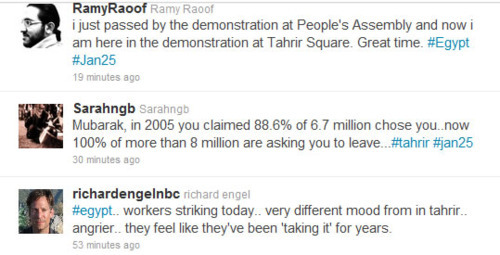
However, to play devil's advocate, there have been some instances in which the exposure of ideas, appearances and events have been helpful. Take the 2011-2012 Egyptian Revolution as an example. This event exemplifies how social media can help the rapid spread of ideas and increase global awareness. The Egyptian citizens took to Facebook, Twitter and other social media outlets to express their anger, which arguably fueled and aided the effort. Otherwise, the convenience of having streaming global news and the ability to hear from individuals all over the world about what is happening to them is powerful.
I'm not afraid to admit that I'm split on the issue of whether or not this technological revolution has been positive or negative. There are clearly two sides to this issues, which is why I'm going to open this up to you all. Has the technological revolution made us too exposed? Are our appearances no longer personal?
Aside from the conveniences of exposure from new technology, there are considerable inconveniences that have arisen from this "technological revolution". Technology has put us and the world around us on display. The actions we perform are visible. Our appearance is stamped somewhere on the Internet. This makes concerns such as identity theft, online predation, copyright violations and invasion of privacy all the more real.
I am personally an avid user of technology and find it to be quite beneficial to my daily routine. However, has technology left us too exposed? Has our appearance become completely publicized? Unfortunately, it seems as though the Internet privacy scandals have racked up in the past several years. Take the Google Maps Street View scandal or the Instagram privacy scandal as examples. I hear almost constantly on the news stories about an individual finding their photo on a strange website or their personal data being sold to a third party. Some get caught, as Facebook did in 2011 over the Federal Trade Commission's complaint over Facebook's false promises and privacy breaches. However, the FTC cannot catch every scandal, so internet users are falling victim to these sorts of issues daily.
However, to play devil's advocate, there have been some instances in which the exposure of ideas, appearances and events have been helpful. Take the 2011-2012 Egyptian Revolution as an example. This event exemplifies how social media can help the rapid spread of ideas and increase global awareness. The Egyptian citizens took to Facebook, Twitter and other social media outlets to express their anger, which arguably fueled and aided the effort. Otherwise, the convenience of having streaming global news and the ability to hear from individuals all over the world about what is happening to them is powerful.
I'm not afraid to admit that I'm split on the issue of whether or not this technological revolution has been positive or negative. There are clearly two sides to this issues, which is why I'm going to open this up to you all. Has the technological revolution made us too exposed? Are our appearances no longer personal?
Subscribe to:
Posts (Atom)