Firstly, Egypt is not considered to be in the bottom billion. However, that doesn't mean Egypt hasn't or doesn't deal with any of the traps Collier mentions. Let's start, though, with the traps Egypt does not deal with and how that affects Egypt's well-being.
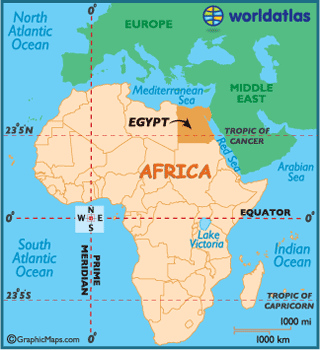
Egypt is not landlocked. Though most countries that suffer from the landlocked trap are in Africa, Egypt happens to be located on the coast, making it able to take advantage of the Mediterranean Sea and Red Sea. Coastal access is vital for a country, as it links the country to strong trade routes. This allows Egypt to trade more easily with other countries and maintain a steady flow of imports and exports. For this reason, the income Egypt gains from coastal trade helps keep the country out of poverty as well as prevents them from having to rely on their neighbors.
Additionally, Egypt is not greatly affected by the natural resource trap. Though Egypt is commonly thought of for its abundance of crude oil and petroleum products and exports a considerable amount of this yearly, Egypt seems hardly phased. Why? Well, Collier notes that the more natural resources a country has, the more competition and selectivity there is. Also, a country could then be controlled solely by a specific natural resource and all its other resources will become hardly competitive. However, with Egypt's location near sea trade routes, the transportation and exposure of Egypt's goods are greater than usual, so it seems that Egypt then doesn't have a problem with transporting its goods evenly. Not being landlocked clearly helps with this.
Conflict, in general, is a trap that most countries inevitably fall into. Egypt currently faces some internal conflict, for example the uprisings regarding the new Egyptian Constitution, and that naturally distracts Egypt's government and citizens from keeping peace and focusing on other crucial aspects of society. However, though conflict may sometimes be a trap for Egypt, bad governance is the trap Egypt mainly falls into.

Though Egypt is heading in a better direction with its government, "bad governance" is arguably its most prominent trap. A corrupt and uncooperative government prevented Egypt from progressing with the rest of the world, leaving it with a lot of "cleaning up to do" after Mubarak was ousted. Additionally, constant uprisings and a lack of confidence in the government proves to be detrimental to the economy, as less people will invest their money into the well-being of the country. Also, the uprisings in Egypt were violent and teared apart the overall stability and peace in the country. This trap though, did help Egyptian citizens consider their image and their President's image, which in the long run, will potentially bring about positive change.
Could these new changes in Egypt rid the country of the bad governance trap? I suppose only time will tell...

No comments:
Post a Comment