It goes without saying that technology has increasingly influenced our world and lifestyle. In many ways, technology has made life easier on us. Computers, tablets, smart-phones...they connect people around the world, making it easier to communicate, learn about new cultures and hear about current affairs. Only now is it possible to meet someone over the weekend and be able to maintain a relationship with them long after you've parted ways or hear about a natural disaster that happened thousands of miles away within minutes of it happening.
Aside from the conveniences of exposure from new technology, there are considerable inconveniences that have arisen from this "technological revolution". Technology has put us and the world around us on display. The actions we perform are visible. Our appearance is stamped somewhere on the Internet. This makes concerns such as identity theft, online predation, copyright violations and invasion of privacy all the more real.
I am personally an avid user of technology and find it to be quite beneficial to my daily routine. However, has technology left us too exposed? Has our appearance become completely publicized? Unfortunately, it seems as though the Internet privacy scandals have racked up in the past several years. Take the
Google Maps Street View scandal or the
Instagram privacy scandal as examples. I hear almost constantly on the news stories about an individual finding their photo on a strange website or their personal data being sold to a third party. Some get caught, as
Facebook did in 2011 over the
Federal Trade Commission's complaint over Facebook's false promises and privacy breaches. However, the FTC cannot catch every scandal, so internet users are falling victim to these sorts of issues daily.
However, to play devil's advocate, there have been some instances in which the exposure of ideas, appearances and events have been helpful. Take the
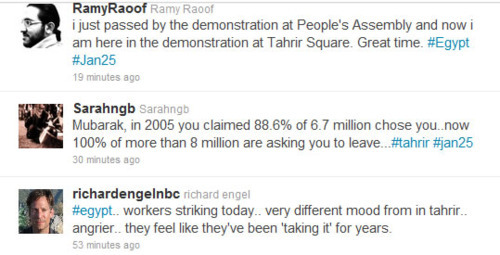
2011-2012 Egyptian Revolution as an example. This event exemplifies how social media can help the rapid spread of ideas and increase global awareness. The Egyptian citizens took to Facebook, Twitter and other social media outlets to express their anger, which arguably fueled and aided the effort. Otherwise, the convenience of having streaming global news and the ability to hear from individuals all over the world about what is happening to them is powerful.
I'm not afraid to admit that I'm split on the issue of whether or not this technological revolution has been positive or negative. There are clearly two sides to this issues, which is why I'm going to open this up to you all. Has the technological revolution made us too exposed? Are our appearances no longer personal?


Unfortunately, every "revolution" has cons. The industrial revolution, many would argue, has led to climate change due to the increase in pollution. In the same way, the technological revolution is causing many negative consequences, from complete exposure to the loss of a personal and private space. But just as the industrial revolution was probably overall a good change, given the rise of a middle class that improved the living standards of millions as well as the advancement of science and other important fields, the technological revolution is overall good.
ReplyDeleteThe negative effects, from the constant risk of public exposure to the loss of a private space, could even be seen as positive, making people more aware of their actions and more cautious in their behavior.
Austin- you bring up a good point when you say that the cons of the technological revolution could be thought of as positives. Though some individuals may feel frustrated with the lack of privacy and space, however this characteristic may solve some other problems. For example, like you said, information is more accessible and individuals can't as easily get away with awful crimes as they used to. This could foster a more cautious, more aware and more involved society. I suppose it does depend on what perspective you take on it.
ReplyDelete