Thursday, May 16, 2013

Look Inside the Lab

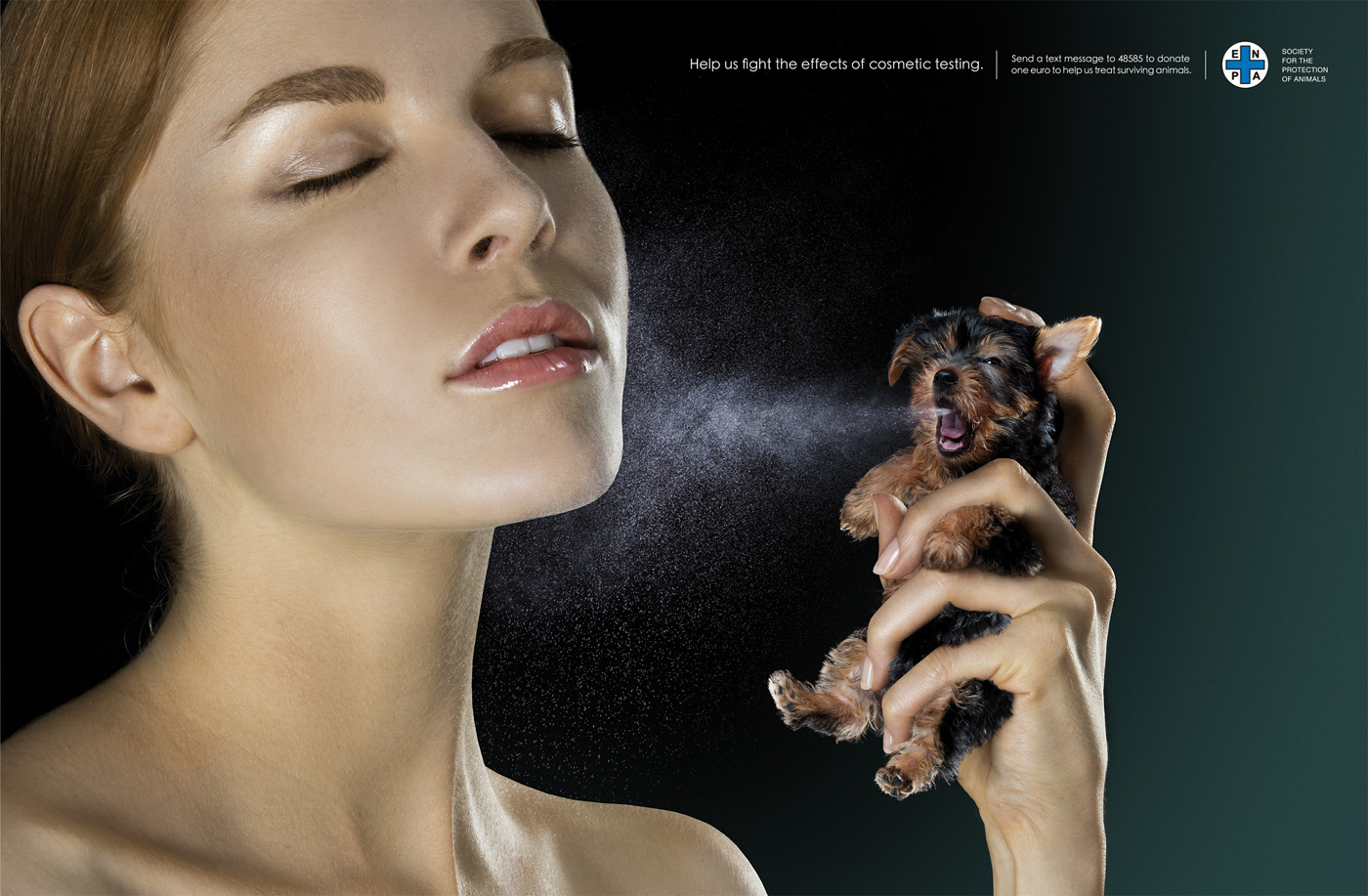
I wanted to take a break from my broader, more philosophical posts to talk about a serious issue that I am looking to raise awareness about. For the past few months, I've been working on project that was assigned to me which essentially asked students to choose an issue and take an action to help solve it. Initially, I didn't think much of this project and didn't expect to become completely immersed into the issue. However, this changed upon my initial research, and I feel so strongly about this issue that I want to inform my readers.

It's an unfortunate reality that animals are being subjected to inhumane and unnecessary experimentation in research labs, universities and medical schools all around the world. For many taxpayers, their own money is even going to these universities and labs to support this process without them even knowing. Most of these institutions have chosen not to even create a specific policy to prevent cruel treatment of animals and the unnecessary practice of animal experimentation, which means that individuals are left in the dark about what they are doing inside the lab.

I personally believe that imprisoning animals and performing experiments on them is archaic for these well-established and modern universities and institutions. With the plethora of computer programs, modern techniques and advanced technologies available to us currently, it isn't necessary or even helpful for scientists to experiment on animals. Animal testing is not only inhumane, but also quite unreliable compared to advanced non-animal testing methods. Animal testing lacks scientific value and doesn't progress the knowledge of biology and medicine in a way that non-animal methods of experimentation cannot.

For this reason, I feel that we should all stand together and work to get institutions to develop a clear policy that prohibits severe animal suffering in the lab as well as promote non-animal methods of testing. There are a plethora of ways to get involved , whether it means simply signing a pledge to be cruelty-free, signing petitions, informing friends or family about this issue, raising money for a non-for-profit organization or sending letters to your local university or laboratory to express your discontent. The littlest action can make a huge difference and I believe that if we choose to look inside the lab and recognize the atrocities being committed, then we can tackle this problem and bring justice to animals.


Look Giving and You're Golden

From first grade to eighth grade, my life revolved around Girl Scouts. While the activities associated with Girl Scouts can include selling cookies to win prizes for yourself or taking trips with your troop to spend time with your friends, it wasn't what I spent the most time in Girl Scouts doing. I spent most of my weekends going to retirement homes, helping out at food drives, or raising money for charities. 

I may not be able to speak on behalf of all my fellow troop-members, but that was my favorite part of Girl Scouts. I'm not even kidding you! I sometimes chose not to go to the social events or partake in some of the purely fun activities because that wasn't what I had truly enjoyed as a kid. I actually loved going places and doing good. It was a value that was instilled very early on- clearly- and has surely been carried on into the future. Maybe I'm just naturally one of those people who loves community service, but I have a feeling that my exposure to it early on in life helped create this interest in doing good for others in my community. 

What is saddening to me, though, is the misconception many people have about service learning and volunteer work, especially at my age. For the past several years, it was almost social suicide to not be doing some sort of service project. That awkward silence would arise when someone mentioned their plethora of sports, clubs and leadership activities...but no community service. It just wasn't common. Typically, I would consider this an amazing thing, but I've come to believe that doing community service is common for all the wrong reasons. 

Obviously, merely doing service work, for whatever reason, will have its benefits. However, as someone who truly enjoys community service for what it should be, it's frustrating to see others tarnishing the deed. I don't know how many friends of mine, last year [college application season], involved themselves in regular volunteer work. It was surprisingly very many. While that was exciting to see, I soon realized that these individuals weren't doing this because they suddenly felt compelled to improve the living conditions of those around them. Because unfortunately, as those acceptance letters came pouring in, more and more of my classmates began dropping commitment after commitment. 

Yes, community service and volunteer work has become the classic resumé-builder. It's almost a staple. There's usually a box, on most applications, which request that one lists their community service activities and commitments. It also almost seems like if you aren't doing volunteer work, you're not a good person.

I understand that applications and resumés are important and that one must do what they need to do to get the job, however the obviously selfish utilization of volunteer work for purely personal gain has made all of us teens who actually like service look pretty bad. So maybe it's time to reconsider your run-of-the-mill volunteer work purely as a resumé-builder. In my opinion, everyone has a passion, and if we all took time to find a way to exercise that passion in a way that helps others, it would bring greater benefits than being a cookie-cutter volunteer worker just to look "good". 

Thursday, May 9, 2013

Finale

As things come to a close, I remember back to a quote I brought up in one of my first posts:
"All that glitters, isn't gold". I remember sitting down at the computer, writing that and wondering what that actually means. I even considered...what if this premise, this idea that I've founded my whole blog upon, fails me?

Months later and now feeling that I've gotten a better understanding of what this quote means, I hope that I've offered you, the readers, some ideas to consider. I hope that you too have found an explanation for this quote...or at least reconsidered the implication of appearance in our lives. While I may not continue to post new ideas onto this blog, I think my mission has been complete if I've laid the foundation to consider the role of appearance and aesthetics. From politics, music, art, grocery shopping, and honestly, so much more.. the glitter seems to captivate people more often than not. But the fascination of aesthetics, the glitter in our lives, doesn't always have to influence our decisions. We just have to be conscious about it.

As a college-bound student, I'm thinking more and more about being a smart consumer. While it may not be an obvious part of being a smart consumer, I find that understanding how appearances and, in general, superficiality, affects me. For example, after reading an excerpt in English class of The Omnivore's Dilemma by Michael Pollan and studying the factors that affect what we buy at the supermarket, I began to go grocery shopping with a completely new outlook. I never realized how much the appearance of the food- the packaging- affecting my decisions on what to buy. For a college-bound student, this information was admittedly pertinent to me. I'm going to be shopping on my own in a couple months and will have to be "in tune" with what is going on in my head when I'm making decisions.

I understand that this example may not be pertinent to you, the reader, in particular, and I understand that some of my posts may not have been personally relevant, but I truly believe that the influence of appearance and aesthetics on our decision-making processes and thoughts in general is strong. So my parting words are these: I want this idea to stay in your mind. Whether you're a college-bound student, a job-seeker, a teacher...whatever it is that you are passionate about doing...make appearance/aesthetics another lens that you use to be a smart consumer or even just a more perceptive and curious human being.

Wednesday, April 24, 2013

Blood, Gore, Intestines, Oh My!

This post will be the second in my series of guest blogs. This "Walking Dead"-inspired post is brought to you by Elizabeth, another great blogger, who writes primarily on her blog Wrapped Up In Words. Enjoy! 
_________________________________________________________________________________

Hi everyone! My name is Elizabeth Woo, coming all the way from a blog called Wrapped in Words, to guest blog for Nicole. Take 1.

One thing you should know about me before I begin, is that I am a huge fan of this small, award winning show called “Walking Dead,” maybe you’ve heard of it. While I watch it for its killer (literally) plot, I also watch it for the gore. Despite knowing it’s make-up at its finest, the show uses the gore to realistically create scenarios with all the raw emotions and actions that follow. For example, if an arm needed to be amputated, how would it look? How would it be done? What would be the emotions? Covering up such a scene by cutting directly from one scene where he has two arms to another with one arm, seems a bit like avoiding our own shadow.

However, it turns out that the place we need the truth and reality the most, aka the media, doesn’t provide them. In response to the Boston Marathon bombings, the Daily News published the front page with a large picture of a woman lying in a pool of blood. This was the picture they posted:
Pretty powerful, right? Until Andy Neumann, a sports designer at Gannett’s Louisville Design Studio, thought something was a little off. He was right; Daily News had doctored the picture. Take a look:

As many criticisms for the apparent violation of journalistic principle poured in, I was both upset and yet curious. Why did they erase the gore? Daily News was far from the only newspaper to censor images, the Atlantic and Gawker both opted to censor their pictures. Why? As Charles Apple puts it, “If you can’t stomach the gore, don’t run the photo. Period”.

According to the Observer, the decision to publish the gore was mainly dependent on two questions: Does the gore advance the story? Does the gore infringe on the subjects’ privacy? In the case of gore advancing a story, author Jim Lewis pointed out the dangers of photographs becoming “horror-porn.” In other words, pictures that simply captivated audiences through its gore, without providing important information. On the other hand, after photos of the 2010 Haiti earthquake were published Valerie Payean-Jean Baptiste, a Haitian school teacher, referred to the pictures as a “cruelty,” making money on their pain and suffering.

We live in a society where the culture is deeply embedded in visual censorship. In fact, the New York Times in 2008 noted that, “after five years and more than 4,000 American combat deaths, an exhaustive search led to only a half-dozen photos of dead American soldiers.” While it is important to pay due respect to the ones being photographed, Washington Post Picture Editor Bonnie Jo Mount argues that it might be detrimental for us to not see visuals that we need to see. If we continue to avoid seeing the reality of a situation, there is the risk that we might be misled, misinformed, and in the dark.

In an age when taking photos and sending them halfway around the world can be accomplished in simply 2 button clicks, we must ask ourselves which pictures we decide to share and which pictures we decide not to share.

One Photo Truly Worth a Thousand Words

Today's post features a guest writer, Stephanie, who will examine a truly incredible photo used on the cover the most recent Special Report of TIME Magazine. Feel free to check out her blog for more interesting posts. Also, I will be guest-blogging on another great blog called "The Numbers Don't Lie", so feel free to check that out as well!
_________________________________________________________________________________

Photos and paintings have the power to move us in different ways. They may stir anger, sadness, joy, and even a combination of different emotions. Oftentimes a photographer takes a photo to make a statement or capture an intriguing moment. It is no wonder that people frequently say "A picture is worth a thousand words."

In light of the Boston Marathon explosion, Time Magazine released a special tablet issue. The cover photo shows a close image of a frightened toddler, with blood smeared into his disheveled red hair, being carried by a police officer. It is headlined "Tragedy in Boston." Unlike several other images I have seen after the explosion, this one does not show any open wounds and is not explicitly graphic. Nevertheless, the photo is still emotional. The response to this cover, however, has been mixed. Many have responded that the photo is heartbreaking and moving, while others believe the media has gone too far. 

But it is precisely these types of photos and the reactions they generate that draw public attention. Instead of using a photo of a man/woman on a stretcher or of the explosion itself, Time specifically chose to place a little boy on their cover. His expression clearly depicts terror—a sign that perhaps he will be forever scarred with the moment he just lived through. Some Twitter users stated that the image gives “the bad guys” exactly what they wanted—proof that the explosions could affect not only the people at the marathon, as well as the youngest and most innocent; but also cause the entire nation to stir. 

The appearance and details of a photo tell a story. As I look at the photo, I associate the boy’s messy hair with chaos; the blood on his head with an act of terror or violence; and the police officer with help. I do not need to read a page of text to understand that this event will be historic. The image, in many ways, is a shortcut. 

We live in an increasingly fast-paced society. Personally, I do not have time to stop and read every single current event. However, I do have time to skim through news photos and their captions. A photo will often tell me the gist of the story or and important aspect. By seeing it, I also know whether I want to take more time reading about the situation. Perhaps the simplicity of viewing an image as well as the power that an image can possess is why many social networking pages, apps, etc. have become media oriented (for example, Instagram, Pintrest, and SnapChat). In any case, Time Magazine succeeded in finding a photo that represents the Boston explosions, as well as drawing attention to their digital cover. 

Thursday, April 11, 2013

It's All in the Packaging

Going grocery shopping has always been something that I enjoyed to do. However, only recently have I started to pay attention to the actual products and how they are being sold. I mean, you can't blame me. It is so easy to just stroll into a store, particularly Whole Foods, and instantly become captivated by the plethora of fruits, vegetables, artisan soaps and snacks that they are selling. It was enough to distract me from actually considering why products are sold in the fashion that they are and how that indicates something about American culture.

The first question I had to answer was "What makes Whole Foods products so enticing?". I truly do not believe that I am the only one who finds Whole Foods somewhat more exciting than the conventional supermarket. But why? What I realized was that it has to do with how everything appears...how everything is packaged. First, I walk in and see an array of vibrant fruits and vegetables, perfectly stacked with signs reading "Oranges from Spain" or "Organic Strawberries". Then, moving further into the store, the consumer is bombarded by beautifully packaged breads and cartons of eggs, each with a heartfelt story that often takes the reader on a beautiful journey about how that item was produced. Are you beginning to see where I'm going here? It's not the actual food that is mesmerizing, it's the experience, the packaging and the aesthetics. 

The first time I had heard about this concept was while reading an excerpt from a book called The Omnivore's Dilemma by Michael Pollan. Pollan spoke a lot about how grocery shopping has become more of a literary experience, where individuals choose items based more upon their connection to a product's "story" and its appearance, rather than just the type of food itself. While I was initially skeptical, the more I thought about this concept, the more I began to believe it. 

Whole Foods does really go out of its way to give customer's a great experience, from the overall appearance of the store to the little messages they put on their baked goods. It seems like customers, including myself, are beginning to pay more attention to the aesthetics rather than the actual products. While this is, in some ways, a somewhat cool shift, it also poses some serious concerns. For example, if we are becoming so mesmerized by the stories companies write about their food and getting caught up in this sort of fantasy, aren't we ignoring the realities of food production? What I mean is that even though there may be a beautifully written story on a milk carton about how happy the cow that produced the milk was or how nice the farm was, do we believe that? Companies are still often big businesses and will do whatever they want to make a sale. So those beautiful stories are often exaggerations of what is really going on. And how about meat? Meat-producing companies are becoming increasingly conscious of how they package and advertise their food...often to distract from the actual production of the meat that they are selling. It seems like sometimes, people will get so caught up in the advertising, that they forget about the realities of mass food production, which often include cruelty, huge factories, and messy slaughter. So, while it's often a refreshing experience to enjoy all the distractions Whole Foods has to offer (trust me, I love it!), it's also important for consumers to remember that the aesthetics and appearances are usually airbrushed.


Tuesday, April 2, 2013

A New Lens for the Microscope

Compelling characters are often the backbone of good novel. While many observations about the individuals within a novel can be made just by reading the novel casually, critical lenses are always helpful to bring in fresh perspectives. Having recently read Hamlet by William Shakespeare, I was able to thoroughly explore the feminist lens. With this lens essentially exploring how certain authors, especially male authors, represent women in novels, I was essentially able to look at the female characters in a completely new light. How are these women really portrayed?

The feminist lens certainly reveals something interesting: women often appear differently in books than men do. This doesn't even hold true exclusively in literature; almost all forms of media display this. Women are constructed differently. For example, it has been a common dispute in past years regarding women being displayed as the "damsel in distress, always needing the male figure to come save her. While this may not seem like a big deal, I've started to realize how prevalent this is. Countless children's books and fairy tales embodying the same preset: the idea, as feminist critics say, that the women are represented as the "other" or the "lacking" individual. They are often the oppressed ones, the ones stuck at home performing chores, or creating some sort of inconvenience that must be resolved by their male counterpart. By growing up around these stories, it sets a certain standard in which society views women, which subconsciously stays in an individual's brain as they grow up. The feminist lens, when this individual grows up, can then help them answer the questions: Why are women always looking a certain way? Why are women appearing in the same fashion...doing the same things?

Instead of taking the portrait painted of women in novels and films so literally, the feminist lens allows the reader or viewer to delve deeper into the reasoning of why the woman was painted that way. Particularly, the upbringing of the author, the circumstances or societal norms may have dictated how the author portrayed the woman in the novel, exposing questions about the stature of women in society at that time as well. The feminist lens's ability to explore women's roles in a given work as well as tie that to the role of women in society either currently or during the author's time period certainly provides a well-rounded and in-depth look at a certain topic. Additionally, it helps paint a more detailed picture of women and their role in novels and works of art and media, making it a valuable lens for a reader or viewer.

Thursday, March 21, 2013

What Universities do to Stay "Beautiful"

6.3%...7.2%....9.7%....it's acceptance rates like these that, perhaps embarrassingly, make prospective students and interested researchers alike gasp and blush. Universities know that these prestigious, exclusive numbers are marveled over time and time again, making the necessity to uphold them quite strong. Reading these microscopic values previously led me to the conclusion "Well, schools like Harvard and Stanford...they're just selective. They know who they want and they pick wisely!" A couple students cherry-picked to attend and a herd of hopeful students denied. 

However, as I got my first college decision, I opened it to read what essentially led to "wait-listed". I had heard about some of my other friends receiving the same sort of decision and feeling happy about it, as in, they were happy it wasn't a rejection and maybe there was hope. I, on the other hand, wasn't as thrilled. I couldn't feel happy nor could I feel sad. It was a massive question mark. Upon hearing more about students getting "wait-listed" than rejected or accepted, I decided it was time to find out why the wait-list has become so attractive. Is it a real sign of hope or something else?

Well, as I had expected, the infamous wait list isn't as hopeful as it seems. An article from the Wall Street Journal described it as schools wanting to "pad their wait list". Sure, a prospective student may be put on there because they definitely piqued an admissions officer's interest in some way or because they were truly very close to getting a spot, however when a school is wait-listing hundreds, even thousands of applicants, you start to wonder what their intentions are. For example, one can look at Johns Hopkins waiting list of approximately 2700 kids and true freshman class size of about 1200 kids question if they're really that indecisive or if they are just trying to stay beautiful. And for them, beautiful means exclusive.

Personally, I would rather receive a definite yes or a no from colleges. However, I understand that sometimes space clears up and a wait list is helpful to have. That being said though, it's frustrating to think that a handful of the most prestigious universities are simply trying to "beat the system" in order to keep their acceptance rates low. Would colleges lose their prestige if their acceptance rates began to creep up? As much as I want to think they wouldn't, I honestly would probably assert that our system does value the rates....perhaps a bit too much. 


Tuesday, March 19, 2013

Life Illustrated

Art is one of the most popular ways to express the appearance of and feelings associated with a certain idea, setting or object. However, art's appearance throughout time also indicates aspects of the culture surrounding it. The intricacy, the strokes, the themes seen in art offer viewers an understanding of what individuals during certain time periods valued.

Compare Renaissance Art, which was very detailed, scenic, and intricate, with the more recent Modern Art, which is more thought-provoking, raw and risky. While these characteristics are seen in the actual painting itself, this appearance also reveals something about what society was life during the Renaissance Era or during the early 20th century. For example, the shift to more thought-provoking and risky art during the early 20th century expresses the struggle of artists during this time to revive the popularity of art. By inserting more subliminal messages and controversial ideas, artists were clearly trying to have viewers foster more of a connection with art and gain more meaning from the paintings.

With the "look" of art always shifting alongside societal changes, I decided to explore an art trend that has become a huge trend in our modern culture - pop art. Though it isn't a particularly new concept, pop art has been showing up more and more in exhibits and as inspiration for prominent design companies, such as Vogue. When comparing classic pop art to a painting like "School of Athens" by Raphael Sanzio, it's pretty obvious that there has been a shift in what artists are looking to convey.

While analyzing these examples of modern pop art on the left, some conclusions can be drawn. Pop art is often colorful, loud and formatted like a mirage of many prints, patterns and textures. Many examples of pop art, like the example on the top left, also include references to the media or pop culture. Popular lingo, well-known brands, celebrities... more than any other type of art, pop art truly plays with pop culture and societal norms.

So what does the popularization of pop art illustrate about our culture? Personally, I would say that it shows our interest and inextricable connection to current pop culture. Not only is that seen in how artists are inspired to create pop art but also the amount of interest in viewing this type of art and recreating it. Our culture is so influenced by the media that is reflecting in our artists' illustration of our life and interests. Though pop art is certainly unique compared to many of the other artistic trends that have developed throughout time, however it shows an interesting sense of change. It shows our ousting of the old and interest in starting with something fresh...something new. Even more than that, it shows that we are conscious of the influence of media and pop culture, and that we can use art to express and critique it.

Tuesday, February 26, 2013

The Pageant Craze

Beauty pageants have been a popular pastime for decades, however in this day and age, pageants have grown to be so much more than what they used to be. Nearly everyone I know has watched the TLC show Toddlers & Tiaras or heard about the newly popular toddler beauty pageants. Essentially, the new trend is not to enroll toddlers in summer camps or sign them up for ballet or baseball, but to sign them up for beauty contests.

With hundreds of competitions around the country, children can be enrolled into pageants practically at birth, as the youngest division is 0-11 months old. While there are natural pageants (usually forbid makeup, hair extensions, etc), glitz pageants, which include choreographed routines and look favorably upon big hair, fake teeth, sparkly gowns and nail extensions, are the most popular. Children can compete for a variety of prizes, ranging from money to massive trophies or electronics. Toddlers & Tiaras, which is one of the more commonly recognized shows about toddler beauty pageants, exposes the realities of what the children and families committed to these pageants actually go through.

As innocent and adorable as Toddlers & Tiaras may sound, the controversies connected to these pageants have gained nearly as much attention as the show itself. From giving a child an energy drink mix before going onstage to forcing a child to get her eyebrows waxed to gain points, it seems that some individuals don't have limits when it comes to beauty. When is it too much? Why are there so many parents who seem perfectly content with altering their own child until they seem "flawless"...just for a trophy or some cash?

One of the most disturbing stories I've heard regarding toddler beauty pageants involved a mother who gave botox injections and leg waxing on her 8-year-old daughter. As the article asked, how young is too young? If an individual wants to do these things to themselves when they are old enough to make their own decisions, then so be it. However, it's frightening to think that a mother would allow her daughter, whether she wanted it or not, to get these things done just so that she would be better prepared for a pageant. Clearly this is a recurring thing, which leads me to believe that the beauty pageant system is flawed. Beauty pageants have the potential of being fun and appropriate, however if to win, a child is advised to have fake extensions, fake teeth, a spray tan, an expensive costume, and a lot of makeup...what is that saying about what our society values?

Appearance is important to people; that will likely be true for a long time. However a line must be drawn somewhere. When someone is old enough to make their own decisions and decides that they would like to participate in a beauty pageant, then they can pursue that. Forcing children to do these pageants while altering their natural beauty in the process is a different story. With beauty and makeup already playing such a strong role in our culture today, is it necessary to start exposing children to this specific lifestyle so early? If a child wants to enroll in a beauty pageant, is it necessary to play to win instead of playing for the experience or for fun?

At some point, when a parent has been applying makeup onto their child for 20 minutes straight or starts spray tanning, injecting or waxing their kid, the child begins to lose the appreciation for their natural beauty and for who they are themselves. If a child grows up thinking that they must be beautified to be rewarded, that sentiment is likely there to stay.

Craving a Diagnosis: Problematic?

Disease is oftentimes considered purely scientific. If an individual feels sick, they can go to their doctor, take some tests and leave with a medically-based diagnosis. Take strep throat- not only can you visibly recognize the appearance of this disease, but you can get a definitive diagnosis by taking a throat culture. If you have it, there's no denying it and you can get medication, feeling secure about your specific prescription. However, not all diseases are so clear. Consider those diseases or disorders that are diagnosed merely by appearance or by vague symptoms, such as ADHD.

ADHD, a neurobehavioral disorder, is diagnosed through a psychiatric assessment. Essentially, information about you is collected, some other diseases must be ruled out, and then you get a diagnosis. There is no blood test or study that can be done to verify your diagnosis, meaning error and over-diagnosis is possible. The possibility of error sounds even more like a reality when you look at the symptoms/criteria associated with ADHD. Some include: difficulty focusing, daydreaming, talking nonstop, impatience. To be quite honest, I've experienced all of these symptoms at some point in my life. However, I wouldn't say that I have ADHD. Neither would many others, apparently, as ADHD is currently considered one of the most over-diagnosed diseases.

Along with depression, bipolar disorder and stress, ADHD has been creating controversy. What could be the main theme here? I would argue that these are all appearance-based diseases or disorders. Because of the lack of lab tests, blood samples, or any type of distinct evidence, they are being diagnosed by appearance (symptoms, trends, etc). Doctors, teachers and parents will look at an individual, study their general being, and come to a conclusion. Sometimes it is accurate- don't get me wrong- and treatment can benefit patients, however it's hard to ignore the fact that ADHD diagnosis among children has increased by 22% in 4 years. Is it possible that this disease, having not even "existed" until the 1990s, has so rapidly spread? Additionally, how can we explain the fact that ADHD has been diagnosed more in certain regions of the United States than others (see chart above)?

Bringing in approximately $3 billion every year to pharmaceutical companies for ADHD medication, I begin to wonder whether or not we are just craving diagnosis. Maybe our culture has begun to over-embrace the idea of diagnosing a disease and treating it with medication. What if these children are just hyper and distracted? What if it's just a phase? What if those characteristics are symptoms for a different, more severe disease? With appearance-driven disorders like ADHD, one cannot be sure. Taking this uncertainty into consideration and recognizing that there are some children taking 119 pills every week for their disorders, it seems necessary to question whether or not it's okay for doctors to so heavily rely on medication for "appearance-based" disorders. Though medication can sometimes help ADHD patients, it also isn't necessary in some cases. In others, the child may even be misdiagnosed.

With all of this in mind, I would say that our society needs to step away from medicine and try to fight off the craving for a diagnosis. We should more thoroughly examine these disorders and diseases and not let the ease of prescribing medication overshadow the complexity of these "appearance-based" disorders. Perhaps more emphasis must be put on lifestyle changes, such as, in the case of ADHD, finding ways to limit distractions or teaching those with the disorder how to naturally subdue their symptoms. Medicine will always be an option, but certainly shouldn't be the convenient way out. Appearance isn't everything and sometimes what may seem like a certain disorder will end up being something completely different. Let's eliminate our urge to label and medicate and take a more thorough look at how we are handling diseases and disorders.

Tuesday, February 12, 2013

Life Exposed

It goes without saying that technology has increasingly influenced our world and lifestyle. In many ways, technology has made life easier on us. Computers, tablets, smart-phones...they connect people around the world, making it easier to communicate, learn about new cultures and hear about current affairs. Only now is it possible to meet someone over the weekend and be able to maintain a relationship with them long after you've parted ways or hear about a natural disaster that happened thousands of miles away within minutes of it happening.

Aside from the conveniences of exposure from new technology, there are considerable inconveniences that have arisen from this "technological revolution". Technology has put us and the world around us on display. The actions we perform are visible. Our appearance is stamped somewhere on the Internet. This makes concerns such as identity theft, online predation, copyright violations and invasion of privacy all the more real.


I am personally an avid user of technology and find it to be quite beneficial to my daily routine. However, has technology left us too exposed? Has our appearance become completely publicized? Unfortunately, it seems as though the Internet privacy scandals have racked up in the past several years. Take the Google Maps Street View scandal or the Instagram privacy scandal as examples. I hear almost constantly on the news stories about an individual finding their photo on a strange website or their personal data being sold to a third party. Some get caught, as Facebook did in 2011 over the Federal Trade Commission's complaint over Facebook's false promises and privacy breaches. However, the FTC cannot catch every scandal, so internet users are falling victim to these sorts of issues daily.

However, to play devil's advocate, there have been some instances in which the exposure of ideas, appearances and events have been helpful. Take the 2011-2012 Egyptian Revolution as an example. This event exemplifies how social media can help the rapid spread of ideas and increase global awareness. The Egyptian citizens took to Facebook, Twitter and other social media outlets to express their anger, which arguably fueled and aided the effort. Otherwise, the convenience of having streaming global news and the ability to hear from individuals all over the world about what is happening to them is powerful.

I'm not afraid to admit that I'm split on the issue of whether or not this technological revolution has been positive or negative. There are clearly two sides to this issues, which is why I'm going to open this up to you all. Has the technological revolution made us too exposed? Are our appearances no longer personal?

Tuesday, January 29, 2013

A Search for Diversity: University Edition

Having almost finished my plethora of college applications, it is around this time when I start to reflect on the application process. My mind is filled with the statistics from an array of college pamphlets and I can probably recite the common essay questions I've had to answer over these past several, hectic months.

What stands out? Interestingly, the topic of diversity was very much prevalent in the majority of my applications. Nearly all of the college pamphlets I read contained a detailed breakdown of the school's students by ethnicity. Many of the information sessions I attended contained a segment where the admissions officer boasted about how many different backgrounds were present in the school. And at least three of the essays I had to write answered a prompt like " X College prides itself on diversity. Please talk about your background and how that will add to our campus".

Personally, I believe that diversity is important in a college setting. Varied perspectives and unique upbringings provide a more interesting and compelling experience for students since they get to learn about people who are very different from them. However, I began to wonder: has the search for diversity ever gone too far? Have colleges ever been so committed to fostering diversity that they forget about the other aspects of an application? 

Of course. Take two "current" examples: Grutter v. Bollinger (2003) and now Fisher v. University of Texas (currently being heard by Supreme Court). Similar in nature, these court cases center around the idea of affirmative action. Many of the current criticisms regarding this policy stem from students feeling that they were denied because there were more ethnically diverse applicants (same or less qualifications) as competition. Looking at Grutter v. Bollinger, the University of Michigan even admitted that they were quite interested in including as many minorities into the Law School to "provide an opportunity for them"- an idea which the District Court even found unlawful. Though the Supreme Court ultimately upheld affirmative action in that case, here we are, a mere 9 years later, taking a similar case (Fisher v. U. of Texas) to Supreme Court to review the same policy.

Should it stay or should it go? There's definite controversy regarding affirmative action, as seen by this article from Yale News. Some schools deem it necessary...besides, doesn't there need to be some sort of regulation to help bring majority and minority groups together? There are certainly positives to having a multitude of perspectives and stories to share. However, some schools find that minority groups are overrepresented and that there is real discrimination going on in the admissions process. Are policies upholding affirmative action, then, encouraging colleges to choose students based mainly on color of their skin and how "different" they look? Are they just trying to make the school look diverse and not paying enough attention to the actual credentials of the students?

Regardless of the ruling by the Supreme Court for Fisher v. University of Texas, universities need to define diversity- what does that actually mean for our school? With that, the color of an individual's skin should never be the sole factor that gets them into college. Unique experiences, difficult circumstances, passion, grades, extracurriculars...those are the elements that set a student apart. But, like Grutter v. Bollinger, taking a minority into a university just because they are a minority and not because of their great scores, compelling story or extraordinary school involvement, isn't fair to that student or the student who is therefore denied because they do not have the racial "edge". A certain appearance does not equate to a deserving, diverse perspective. There are deserving members in both the majority and minority groups as well as undeserving members. That's why decision-makers should stick to the application and stay away from a compelling appearance or label. 

Sunday, January 6, 2013

Mind-Altering Lab Coat

Have you ever put something on, say, a new suit or a sparkly gown, and feel different than you did a couple hours ago when you were sitting on the couch in your pajamas? Or have you ever wondered why doctors wear white lab coats or sales associates at high end retail shops wear suits? 

I hadn't given much thought to it though, thinking that it was just a coincidence that I would sometimes act classier and more proper when I was dressed up in fancy clothing. However, it seems that clothing doesn't just affect how others perceive you- it has been found that clothing also affect how you act.

A study published by the Journal of Experimental Social Psychology called "Enclothed Cognition" (a spin-off to the term embodied cognition) tested the claim that clothing effects the wearer's psychological processes. Their test revolved around the, you guessed it, infamous white lab coat. The white lab coat has always represented care, diligence, and cleanliness. However, does it actually affect performance? Or is it just worn to make others believe that the individual is careful, clean, etc? 

Source
The study concluded that, yes, wearing a white lab coat will increase your focus and attentiveness. The study first tested whether individuals were more focused when wearing a lab coat versus when they weren't, which showed that the act of physically wearing a coat altered your psychological processes. Additionally, the study tested levels of attentiveness when individuals wore a lab coat described as a doctor's coat versus when they wore a coat described as a painter's coat. This study revealed that the symbolism of the garment also mattered, as the individuals wearing the doctor's coat were more focused than those who wore the painter's coat. 

I find it fascinating that wearing a certain article of clothing, feeling it on your body and placing meaning onto it, can affect the way you think and act. Having previously thought more about how appearance affects the way other individuals think of you, it is riveting to see how appearance may affect the wearer. Though I'm sure more studies must be conducted on this subject, I'm wondering what your thoughts are. Can the way you dress affect your personality? Can it make you smarter, more attentive and well-behaved?

Sunday, December 16, 2012

Veiling: Oppression or Liberation?

In this day and age, where globalization has intertwined the many cultures of the world, it's commonplace to discuss the values and practices of other cultures. What I've been hearing lately has been a lot of discussion revolving around the question "Is the veiling of Muslim women a sign of oppression or liberation?".

In Western society, I don't think it's much of a shock to assert that Western media shines a negative light on veiling. Seeing a woman walking down the streets of Chicago in a hijab, especially a burqa, stirs up controversy. The usual questions arise: "Who would make her wear that thing?", "Why would anyone wear that thing in the United States"?, and even "Is she a threat?". Anger, frustration, confusion. Americans are so used to the status-quo that anything different is considered bad. Typical American dress varies, but in general, we're used to showing a lot of skin. Bikinis, short shorts, and miniskirts are typically acceptable for women, and being topless in public is totally acceptable for men.

Appearance is so important to us, rightfully so, as it is the first thing we see when we look at people. However, it's truly difficult to justifiably say "This is the right way to look" or "This is the wrong way to look".  We think burqas are oppressive? Take a look at this:

I love this photo because it really shows two opposite perspectives on one significant idea. Honestly, for those of you who are Americans or Westerners, have you ever thought of this perspective? That the way women dress in Western culture exemplifies a male-dominated culture?

Appearance has a lot to do with perspective. What I take away from this is that an individual must understand the reason why someone else dresses or appears the way they do. Preconceptions and rumors go a long way, but they are rarely true. Going back to veiling in Muslim societies, sure, some women may feel oppressed and forced when wearing a burqa. That's a possibility. However, there are undoubtedly veiled women who feel like the woman wearing the burqa in the comic. Women who cover themselves to feel modest and gain self-respect.

This article gives a pleasant, positive perspective on veiling. Take Dawud, the Muslim Student Association board member, as an example. Dawud said that "[the hijab] defines who I am as a Muslim woman. It is a constant reminder of my faith....As women, we tend to be constantly objectified and expected to play out certain roles. I feel like the hijab breaks that barrier down". See that? Here's a woman who not only feels proud that she wears a hijab, but also a woman who chose to wear it out of her own free-will. Not the sort of story you would expect to hear on typical American television, right?

So are veils always a positive sign? No, but I like to think that they aren't as negative as the Western media portrays them to be. Appearance is powerful and indicates plenty, however each individual's appearance has a complex back story. That being said, before we judge a tradition, let's do some proper research before coming to any major conclusions.

Tuesday, December 4, 2012

Egypt- The Traps

Every country has an image. This image is made up of its strengths, weaknesses, the way the country interacts, reacts, governs, etc. This image in turn affects a country's classification: how it would be ranked compared to other countries. The decisions a country makes and the circumstances a country is under can greatly affect its standing in the world. In The Bottom Billion by Paul Collier, Collier discusses some of the critical factors that affect a country's image. Specifically, the book focuses on the various "traps" that bring a country to be considered in the bottom billion. These four traps include: conflict, natural resources, bad governance, and being landlocked. To explore Collier's argument, I decided to focus in on Egypt, a country that has gone through a considerable amount of change in the past year, and see how its image correlates to these traps.

Firstly, Egypt is not considered to be in the bottom billion. However, that doesn't mean Egypt hasn't or doesn't deal with any of the traps Collier mentions. Let's start, though, with the traps Egypt does not deal with and how that affects Egypt's well-being.

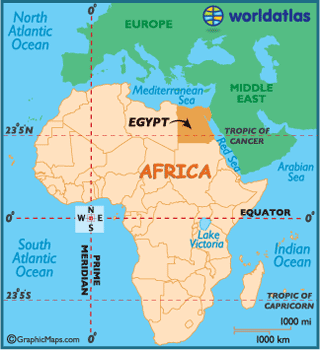
Egypt is not landlocked. Though most countries that suffer from the landlocked trap are in Africa, Egypt happens to be located on the coast, making it able to take advantage of the Mediterranean Sea and Red Sea. Coastal access is vital for a country, as it links the country to strong trade routes. This allows Egypt to trade more easily with other countries and maintain a steady flow of imports and exports. For this reason, the income Egypt gains from coastal trade helps keep the country out of poverty as well as prevents them from having to rely on their neighbors.

Additionally, Egypt is not greatly affected by the natural resource trap. Though Egypt is commonly thought of for its abundance of crude oil and petroleum products and exports a considerable amount of this yearly, Egypt seems hardly phased. Why? Well, Collier notes that the more natural resources a country has, the more competition and selectivity there is. Also, a country could then be controlled solely by a specific natural resource and all its other resources will become hardly competitive. However, with Egypt's location near sea trade routes, the transportation and exposure of Egypt's goods are greater than usual, so it seems that Egypt then doesn't have a problem with transporting its goods evenly. Not being landlocked clearly helps with this.

Conflict, in general, is a trap that most countries inevitably fall into. Egypt currently faces some internal conflict, for example the uprisings regarding the new Egyptian Constitution, and that naturally distracts Egypt's government and citizens from keeping peace and focusing on other crucial aspects of society. However, though conflict may sometimes be a trap for Egypt, bad governance is the trap Egypt mainly falls into.

In 2011, people from around the world watched as Egypt protested the rule of Hosni Mubarak. The 2011-2012 Egyptian Revolutions indicated that Egyptians had been battling bad governance and had finally bursted. These revolutions also indicated that Egypt had finally solidified in their minds what exact image represented a president for them. For example, Egyptians fought for free elections, freedom of speech, legitimacy and the end of emergency law. That is what they wanted and expected to see. Now, this image resonates even today with the new presidency in Egypt, as can be seen in the uprisings against Morsi regarding his declared rights regarding the Constitution drafting, as mentioned before.

Though Egypt is heading in a better direction with its government, "bad governance" is arguably its most prominent trap. A corrupt and uncooperative government prevented Egypt from progressing with the rest of the world, leaving it with a lot of "cleaning up to do" after Mubarak was ousted. Additionally, constant uprisings and a lack of confidence in the government proves to be detrimental to the economy, as less people will invest their money into the well-being of the country. Also, the uprisings in Egypt were violent and teared apart the overall stability and peace in the country. This trap though, did help Egyptian citizens consider their image and their President's image, which in the long run, will potentially bring about positive change.

Could these new changes in Egypt rid the country of the bad governance trap? I suppose only time will tell...

Thursday, November 15, 2012

The Photoshop Craze

Have you ever examined the photos in magazines...specifically photos of people? Have you noticed the flawless complexion, creaseless clothing, bright white teeth, perfect makeup and wrinkle-less skin? If you haven't, don't feel bad. It was only recently that I began to recognize how "perfect" everyone looks when they're placed in a magazine. Is it just that these people look flawless in real life or is something deceiving going on?

I would argue the latter. Photoshop, a computer program that is able to alter photos in incredible ways, has been showing up more and more in magazines than most individuals probably realize. When I used to look at a photo of someone in a magazine, I expected the minor touch-ups: get rid of pimples, smooth out some areas, etc. But could photos be far more "photoshopped" than expected?

Here is a video that shows just how easily a photo can be altered without looking altered.


The ease of photoshop shown in this video brings up the concern: how do we know if photos are real or not? Could every photo just be fake? How does that affect, then, a reader? My main concern is that there are people looking at these photos and comparing themselves to those images. If photos of individuals in the majority of magazines are photoshopped to be flawless, what is that telling readers about self-image and about what is socially accepted? That beauty is having flawless skin, perfect teeth and makeup? Hmm...

To understand the prevalence of photoshop in mainstream media, this article from The New York Times does a great job of explaining it. One thing from it that I want to highlight is the idea that photoshopping is not always the editors initiative. 

The article mentioned, for example, that "Chris Buck, a celebrity photographer who describes his shots as more natural, tells his assistant during photo shoots not to let a publicist or celebrity look at his work. He said his approach has cost him some business, especially with older actresses" (Haughney 1). 

Yikes. It seems like celebrities aren't so offended to see themselves brushed up a little. But what implications does that have on magazines that, well, preach about "being yourself" and being "natural" like Seventeen Magazine? Did they not expect that someone would eventually think it's hypocritical to preach to girls that they should be natural but still publish magazine with photoshopped and overly edited photos? Well, here's what happened. Julia Bluhm, a 14 year old girl, called the magazine out on it and got the editor-in-chief Ann Shoket to pledge not to alter the photographs in the magazine. As skeptical as I am that Shoket will actually never alter photos, it's promising that people are beginning to call magazines out on this issue. Even better, Bluhm's petition on photoshopped photos in Seventeen caught a lot of attention and young girls are now looking to get Teen Vogue, another magazine, to make the pledge. 

Will it catch on? Or will photoshopped, flawless, and deceiving images be here to stay? Are we ready to reject the ideals magazines paint for us? I guess time will tell. 

Sunday, October 28, 2012

Presidential Beauty Contest

 http://i.i.com.com/cnwk.1d/i/tim/2012/10/03/debate_1003_preexisting_480x360.jpg
Whenever I've had a formal presentation in class, I've always been asked to dress nicely. I can still hear my numerous teachers mentioning "A suit and tie for men...dress or blouse and dress pants for ladies" before every presentation I'd give.

Why do teachers want students to dress up for a speech or presentation? The answer is simple. Individuals look more put together, sophisticated and professional when they are dressed up, which instinctively sets the mood for the rest of the presentation.

Needless to say, this custom resonates far beyond the classroom. For the past couple weeks, there have been numerous debates, conferences and speeches being made for this Election season. Most notable are the heated Presidential Debates between President Barack Obama and Governor Mitt Romney. If you're like me, always having an invisible microscope out to examine the details not usually considered, maybe you've considered the way these candidates looked.

The photo above is of the two candidates, Romney and Obama (respectively), at the first Presidential Debate. What's there to notice? First of all, the suits. Obama opted for a navy blue suit, while Romney chose a classic black suit. The President went with a blue tie and American flag lapel pin, while the Governor selected a red striped tie and an American flag pin as well. What are the candidates trying to have their style choices say about them? Elizabeth Wellington, a writer for philly.com, explained her answer to this question by saying that "both men have to look compassionate, yet strong. Romney must be careful not to look too much like a wealthy one-percenter, while President Obama can't come across as too forceful, yet he must be presidential" (Wellington). 
For the rest of Wellington's article, click here

With what Wellington said, the candidates also want their appearance to evoke emotions with their appearance. A great way to do this is by picking a great tie. I'm not kidding you. Ties, out of all the other pieces that make up a typical male's formal outfit, have the most color flexibility. That being said, each potential color evokes a different emotion, so the color of a candidate's tie can say a lot about them. 


For the first debate, Obama selected a blue tie. Firstly, blue is the color of the Democratic Party, which easily signals to spectators "I'm the democratic candidate". Also, blue is considered a calming color. According to the basic representation of colors, determined by 1940's Swiss psychotherapist Max Lüscher, the color blue evokes feelings of commitment, dependability and inspiration. (For more on the emotions evoked by colors, click here.)


Romney, who chose the Republican Party's color, red, also likely thought about evoking specific emotions. The color red is associated with feelings of stimulation: passion, strength, energy and enthusiasm. Romney, often considered as the "underdog" or "challenger" in the election, chose well in my opinion with the red tie. He wanted to get noticed, attract attention and seem strong. A red tie clearly evokes those emotions more than a blue tie. The blue tie, however, suited Obama's demeanor better, who, as the current president, wanted to reassure Americans that he has been a good, dependable President and wishes to continue to inspire Americans. 


To top this off, studies have shown that each party favors a different look for their candidates. An article from livescience.com found that "'Republicans tend to do better when they look like a high-school quarterback or a CEO- square jaw, cropped hair'.... Democrats did better when they had the look of a college professor'" (Bryner).

The same source also did an experiment where participants looked at photos of opposing congressional candidates and were asked to choose which candidate appeared more competent, more intelligent, more likable and more trustworthy.

The article noted that "candidates who were labeled as more competent and more trustworthy were more often identified as Republican, while Democrats were more often linked with traits of likability and intelligence" (Bryner).
For the rest of this article, click right here!

So is it just one large coincidence or do candidates really spend more time on their appearance than the average individual expects? I think it's hard to write this one off as just a fluke. Appearance is clearly an important factor in how others perceive an individual, and just like my experiences of dressing up before giving a class speech, it's highly unlikely that our fellow presidential candidates don't give some concrete thought into how exactly they look when they're on our TV screens. After all, even the seemingly tiny details could make a huge difference when it comes time to vote.

Tuesday, October 16, 2012

Are employers looking at your resumé or at YOU?

Here's a question I've been pondering:

Does appearance really affect an individual's chance of scoring the job they want? 

I mean, I doubt that I'm the only one who has thought about this. Technically speaking, appearance isn't supposed to be a factor in the workplace. But employers are humans and don't all humans have a bias? Don't all employers have a preference or a plan to fill their workplace up with a specific type of people? Whether it's denying someone because they don't bring aesthetic diversity to the company or for just looking too rough, too artistic, or too preppy...it's hard to accept the idea that employers are so well trained that they are focusing 100% on the resumé and 0% on the looks. 

It's hard to deny that career-related stereotypes exist and it doesn't take more than a quick google image search to confirm this. 

What image pops in your head when you think about an aerobics instructor? Or a nurse?
http://www.examiner.com/images/blog/wysiwyg/image/aerobics(1).jpg
http://nursejobsvancouver.com/wp-content/uploads/2011/11/nurse_jobs_vancouver.jpg

After doing a quick scan of what images I saw when I searched "fitness instructor" and "nurse", the results looked a lot like these two photos. Aerobics instructors were predominately women who were very skinny, wearing classic yoga gear or a more revealing sports bra/shorts ensemble, and seemingly young and "fresh". The photos for nurses were almost all of women, all wearing scrubs, smiling, hair pulled back cleanly and neatly, and the stethoscope naturally in view. 

Does Google Images answer all of my questions? Definitely not, however it really gets at what sorts of strong stereotypes we as humans have for different jobs and professions. That being said, because there are so many stereotypes in the workplace, it's understandable to claim that certain individuals do face discrimination in certain fields. 

Let's go back to the fitness instructor example. What sorts of people could be disadvantaged by the aesthetic stereotypes in this field? 

Take a look at this story: 

Here is the classic example of job discrimination based on appearance. This prospective employee, Portnick, could have been the most dedicated employee Jazzercise had ever had. She might have had a stunning resume, filled with dozens upon dozens of experiences and qualifications making her fit for the job. But she was turned down just because she didn't "appear fit". I sometimes feel that people assume this sort of discrimination only goes on in very obviously aesthetically-based fields like modeling, for example. Portnick's story shows, however, that appearance may matter more to employers in all sorts of fields than many of us expect. 

Take a look at this quote from the article:
"In a recent analysis, the Federal Reserve Bank of St. Louis reviewed various economic studies to find possible links between looks and wages. The study's conclusion: A worker with below-average looks tended to earn significantly less -- on average 9% less -- per hour than an above-average-looking employee. And those with above-average looks tended to earn 5% more than their average-looking colleagues.
'If someone looks like Brad Pitt or Julia Roberts, and society values that, that attribute is built into wages," says Michael Owyang, an economist who worked on the analysis'."

Unbelievable, right? Not only does appearance affect the likelihood that an individual will get the job but it also affects how much money that individual will be making. 

So is it inevitable? Will certain people merely be destined to receive lower wages than others? Should Portnick accept that she simply does not fit the mold and pursue something else? Each individual will have a unique answer to each of those questions. From my perspective though, discrimination based on appearance is superficial and hollow. Though someone may not look fit for a certain position or job, that doesn't mean they aren't capable of doing it or potentially able to redefine how the job is done. I know it sounds cliché, but I'm a firm believer that heart and passion are what stands out stronger than the way someone looks. But that's my take on it.

All that glitters isn't gold.
~Shakespeare, Tolkien

Agree? Disagree?

Thursday, October 4, 2012

The Short One

I vividly remember my middle school days, particularly Picture Day. Picture Day was the one day, every year, where I would dress in my best clothes, straighten my hair to look the best it could possibly look, give my biggest smile and....stand in the back of the line. Every. Year.

Yes, I'm the short one. The shortest one. 5'1 to be exact. That was my classification for years on end. I was the one people mistook for a younger kid, the human post taller kids would lean on, the person who needed help reaching a book on the top shelf. And every year, I was the one who would instinctively go to the back of the line when my class took our yearly group picture. It became standard protocol: go to the end of the line and make semi-awkward conversation with the same boy who always stood in front of me. Being short was my signature. It defined me, in one way or the other, and I'll never forget it.

Now a senior in high school, I may not be the human post anymore, but I still hold that my height is my trademark. Doesn't everyone have their trademark look? Something about their appearance that defines them? Blonde hair, long legs, brown eyes, short pixie haircut, combat boots. Aren't we judged by the way we look? Doesn't our appearance affect aspects of our life?
"Diversity" by Karen Merry
As the short one, I feel as if appearance affects everyday life in more ways than one would expect. From affecting a prospective voter's perception of presidential candidates, to giving a reader a very specific and telling description of a character, to defining a culture or affecting your chances of getting a job—appearance and aesthetics hold value in many aspects of society. These are the ideas and situations I want to explore in detail.

Who knows? Maybe we do judge books by their covers. 

Nicole

Merry, Karen. "Diversity." Fine Art America. N.p., n.d. Web. 04 Oct. 2012. <http://fineartamerica.com/featured/diversity-karen-merry.html>.