Beauty pageants have been a popular pastime for decades, however in this day and age, pageants have grown to be so much more than what they used to be. Nearly everyone I know has watched the TLC show Toddlers & Tiaras or heard about the newly popular toddler beauty pageants. Essentially, the new trend is not to enroll toddlers in summer camps or sign them up for ballet or baseball, but to sign them up for beauty contests.
With hundreds of competitions around the country, children can be enrolled into pageants practically at birth, as the youngest division is 0-11 months old. While there are natural pageants (usually forbid makeup, hair extensions, etc), glitz pageants, which include choreographed routines and look favorably upon big hair, fake teeth, sparkly gowns and nail extensions, are the most popular. Children can compete for a variety of prizes, ranging from money to massive trophies or electronics. Toddlers & Tiaras, which is one of the more commonly recognized shows about toddler beauty pageants, exposes the realities of what the children and families committed to these pageants actually go through.
As innocent and adorable as Toddlers & Tiaras may sound, the controversies connected to these pageants have gained nearly as much attention as the show itself. From giving a child an energy drink mix before going onstage to forcing a child to get her eyebrows waxed to gain points, it seems that some individuals don't have limits when it comes to beauty. When is it too much? Why are there so many parents who seem perfectly content with altering their own child until they seem "flawless"...just for a trophy or some cash?
One of the most disturbing stories I've heard regarding toddler beauty pageants involved a mother who gave botox injections and leg waxing on her 8-year-old daughter. As the article asked, how young is too young? If an individual wants to do these things to themselves when they are old enough to make their own decisions, then so be it. However, it's frightening to think that a mother would allow her daughter, whether she wanted it or not, to get these things done just so that she would be better prepared for a pageant. Clearly this is a recurring thing, which leads me to believe that the beauty pageant system is flawed. Beauty pageants have the potential of being fun and appropriate, however if to win, a child is advised to have fake extensions, fake teeth, a spray tan, an expensive costume, and a lot of makeup...what is that saying about what our society values?
Appearance is important to people; that will likely be true for a long time. However a line must be drawn somewhere. When someone is old enough to make their own decisions and decides that they would like to participate in a beauty pageant, then they can pursue that. Forcing children to do these pageants while altering their natural beauty in the process is a different story. With beauty and makeup already playing such a strong role in our culture today, is it necessary to start exposing children to this specific lifestyle so early? If a child wants to enroll in a beauty pageant, is it necessary to play to win instead of playing for the experience or for fun?
At some point, when a parent has been applying makeup onto their child for 20 minutes straight or starts spray tanning, injecting or waxing their kid, the child begins to lose the appreciation for their natural beauty and for who they are themselves. If a child grows up thinking that they must be beautified to be rewarded, that sentiment is likely there to stay.
Tuesday, February 26, 2013
Craving a Diagnosis: Problematic?
Disease is oftentimes considered purely scientific. If an individual feels sick, they can go to their doctor, take some tests and leave with a medically-based diagnosis. Take strep throat- not only can you visibly recognize the appearance of this disease, but you can get a definitive diagnosis by taking a throat culture. If you have it, there's no denying it and you can get medication, feeling secure about your specific prescription. However, not all diseases are so clear. Consider those diseases or disorders that are diagnosed merely by appearance or by vague symptoms, such as ADHD.
ADHD, a neurobehavioral disorder, is diagnosed through a psychiatric assessment. Essentially, information about you is collected, some other diseases must be ruled out, and then you get a diagnosis. There is no blood test or study that can be done to verify your diagnosis, meaning error and over-diagnosis is possible. The possibility of error sounds even more like a reality when you look at the symptoms/criteria associated with ADHD. Some include: difficulty focusing, daydreaming, talking nonstop, impatience. To be quite honest, I've experienced all of these symptoms at some point in my life. However, I wouldn't say that I have ADHD. Neither would many others, apparently, as ADHD is currently considered one of the most over-diagnosed diseases.
Along with depression, bipolar disorder and stress, ADHD has been creating controversy. What could be the main theme here? I would argue that these are all appearance-based diseases or disorders. Because of the lack of lab tests, blood samples, or any type of distinct evidence, they are being diagnosed by appearance (symptoms, trends, etc). Doctors, teachers and parents will look at an individual, study their general being, and come to a conclusion. Sometimes it is accurate- don't get me wrong- and treatment can benefit patients, however it's hard to ignore the fact that ADHD diagnosis among children has increased by 22% in 4 years. Is it possible that this disease, having not even "existed" until the 1990s, has so rapidly spread? Additionally, how can we explain the fact that ADHD has been diagnosed more in certain regions of the United States than others (see chart above)?
Bringing in approximately $3 billion every year to pharmaceutical companies for ADHD medication, I begin to wonder whether or not we are just craving diagnosis. Maybe our culture has begun to over-embrace the idea of diagnosing a disease and treating it with medication. What if these children are just hyper and distracted? What if it's just a phase? What if those characteristics are symptoms for a different, more severe disease? With appearance-driven disorders like ADHD, one cannot be sure. Taking this uncertainty into consideration and recognizing that there are some children taking 119 pills every week for their disorders, it seems necessary to question whether or not it's okay for doctors to so heavily rely on medication for "appearance-based" disorders. Though medication can sometimes help ADHD patients, it also isn't necessary in some cases. In others, the child may even be misdiagnosed.
With all of this in mind, I would say that our society needs to step away from medicine and try to fight off the craving for a diagnosis. We should more thoroughly examine these disorders and diseases and not let the ease of prescribing medication overshadow the complexity of these "appearance-based" disorders. Perhaps more emphasis must be put on lifestyle changes, such as, in the case of ADHD, finding ways to limit distractions or teaching those with the disorder how to naturally subdue their symptoms. Medicine will always be an option, but certainly shouldn't be the convenient way out. Appearance isn't everything and sometimes what may seem like a certain disorder will end up being something completely different. Let's eliminate our urge to label and medicate and take a more thorough look at how we are handling diseases and disorders.
ADHD, a neurobehavioral disorder, is diagnosed through a psychiatric assessment. Essentially, information about you is collected, some other diseases must be ruled out, and then you get a diagnosis. There is no blood test or study that can be done to verify your diagnosis, meaning error and over-diagnosis is possible. The possibility of error sounds even more like a reality when you look at the symptoms/criteria associated with ADHD. Some include: difficulty focusing, daydreaming, talking nonstop, impatience. To be quite honest, I've experienced all of these symptoms at some point in my life. However, I wouldn't say that I have ADHD. Neither would many others, apparently, as ADHD is currently considered one of the most over-diagnosed diseases.
Along with depression, bipolar disorder and stress, ADHD has been creating controversy. What could be the main theme here? I would argue that these are all appearance-based diseases or disorders. Because of the lack of lab tests, blood samples, or any type of distinct evidence, they are being diagnosed by appearance (symptoms, trends, etc). Doctors, teachers and parents will look at an individual, study their general being, and come to a conclusion. Sometimes it is accurate- don't get me wrong- and treatment can benefit patients, however it's hard to ignore the fact that ADHD diagnosis among children has increased by 22% in 4 years. Is it possible that this disease, having not even "existed" until the 1990s, has so rapidly spread? Additionally, how can we explain the fact that ADHD has been diagnosed more in certain regions of the United States than others (see chart above)?
Bringing in approximately $3 billion every year to pharmaceutical companies for ADHD medication, I begin to wonder whether or not we are just craving diagnosis. Maybe our culture has begun to over-embrace the idea of diagnosing a disease and treating it with medication. What if these children are just hyper and distracted? What if it's just a phase? What if those characteristics are symptoms for a different, more severe disease? With appearance-driven disorders like ADHD, one cannot be sure. Taking this uncertainty into consideration and recognizing that there are some children taking 119 pills every week for their disorders, it seems necessary to question whether or not it's okay for doctors to so heavily rely on medication for "appearance-based" disorders. Though medication can sometimes help ADHD patients, it also isn't necessary in some cases. In others, the child may even be misdiagnosed.
With all of this in mind, I would say that our society needs to step away from medicine and try to fight off the craving for a diagnosis. We should more thoroughly examine these disorders and diseases and not let the ease of prescribing medication overshadow the complexity of these "appearance-based" disorders. Perhaps more emphasis must be put on lifestyle changes, such as, in the case of ADHD, finding ways to limit distractions or teaching those with the disorder how to naturally subdue their symptoms. Medicine will always be an option, but certainly shouldn't be the convenient way out. Appearance isn't everything and sometimes what may seem like a certain disorder will end up being something completely different. Let's eliminate our urge to label and medicate and take a more thorough look at how we are handling diseases and disorders.
Tuesday, February 12, 2013
Life Exposed
It goes without saying that technology has increasingly influenced our world and lifestyle. In many ways, technology has made life easier on us. Computers, tablets, smart-phones...they connect people around the world, making it easier to communicate, learn about new cultures and hear about current affairs. Only now is it possible to meet someone over the weekend and be able to maintain a relationship with them long after you've parted ways or hear about a natural disaster that happened thousands of miles away within minutes of it happening.
Aside from the conveniences of exposure from new technology, there are considerable inconveniences that have arisen from this "technological revolution". Technology has put us and the world around us on display. The actions we perform are visible. Our appearance is stamped somewhere on the Internet. This makes concerns such as identity theft, online predation, copyright violations and invasion of privacy all the more real.
I am personally an avid user of technology and find it to be quite beneficial to my daily routine. However, has technology left us too exposed? Has our appearance become completely publicized? Unfortunately, it seems as though the Internet privacy scandals have racked up in the past several years. Take the Google Maps Street View scandal or the Instagram privacy scandal as examples. I hear almost constantly on the news stories about an individual finding their photo on a strange website or their personal data being sold to a third party. Some get caught, as Facebook did in 2011 over the Federal Trade Commission's complaint over Facebook's false promises and privacy breaches. However, the FTC cannot catch every scandal, so internet users are falling victim to these sorts of issues daily.
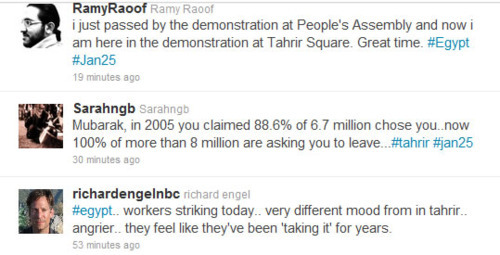
However, to play devil's advocate, there have been some instances in which the exposure of ideas, appearances and events have been helpful. Take the 2011-2012 Egyptian Revolution as an example. This event exemplifies how social media can help the rapid spread of ideas and increase global awareness. The Egyptian citizens took to Facebook, Twitter and other social media outlets to express their anger, which arguably fueled and aided the effort. Otherwise, the convenience of having streaming global news and the ability to hear from individuals all over the world about what is happening to them is powerful.
I'm not afraid to admit that I'm split on the issue of whether or not this technological revolution has been positive or negative. There are clearly two sides to this issues, which is why I'm going to open this up to you all. Has the technological revolution made us too exposed? Are our appearances no longer personal?
Aside from the conveniences of exposure from new technology, there are considerable inconveniences that have arisen from this "technological revolution". Technology has put us and the world around us on display. The actions we perform are visible. Our appearance is stamped somewhere on the Internet. This makes concerns such as identity theft, online predation, copyright violations and invasion of privacy all the more real.
I am personally an avid user of technology and find it to be quite beneficial to my daily routine. However, has technology left us too exposed? Has our appearance become completely publicized? Unfortunately, it seems as though the Internet privacy scandals have racked up in the past several years. Take the Google Maps Street View scandal or the Instagram privacy scandal as examples. I hear almost constantly on the news stories about an individual finding their photo on a strange website or their personal data being sold to a third party. Some get caught, as Facebook did in 2011 over the Federal Trade Commission's complaint over Facebook's false promises and privacy breaches. However, the FTC cannot catch every scandal, so internet users are falling victim to these sorts of issues daily.
However, to play devil's advocate, there have been some instances in which the exposure of ideas, appearances and events have been helpful. Take the 2011-2012 Egyptian Revolution as an example. This event exemplifies how social media can help the rapid spread of ideas and increase global awareness. The Egyptian citizens took to Facebook, Twitter and other social media outlets to express their anger, which arguably fueled and aided the effort. Otherwise, the convenience of having streaming global news and the ability to hear from individuals all over the world about what is happening to them is powerful.
I'm not afraid to admit that I'm split on the issue of whether or not this technological revolution has been positive or negative. There are clearly two sides to this issues, which is why I'm going to open this up to you all. Has the technological revolution made us too exposed? Are our appearances no longer personal?
Tuesday, January 29, 2013
A Search for Diversity: University Edition
Having almost finished my plethora of college applications, it is around this time when I start to reflect on the application process. My mind is filled with the statistics from an array of college pamphlets and I can probably recite the common essay questions I've had to answer over these past several, hectic months.
What stands out? Interestingly, the topic of diversity was very much prevalent in the majority of my applications. Nearly all of the college pamphlets I read contained a detailed breakdown of the school's students by ethnicity. Many of the information sessions I attended contained a segment where the admissions officer boasted about how many different backgrounds were present in the school. And at least three of the essays I had to write answered a prompt like " X College prides itself on diversity. Please talk about your background and how that will add to our campus".
Personally, I believe that diversity is important in a college setting. Varied perspectives and unique upbringings provide a more interesting and compelling experience for students since they get to learn about people who are very different from them. However, I began to wonder: has the search for diversity ever gone too far? Have colleges ever been so committed to fostering diversity that they forget about the other aspects of an application?
Of course. Take two "current" examples: Grutter v. Bollinger (2003) and now Fisher v. University of Texas (currently being heard by Supreme Court). Similar in nature, these court cases center around the idea of affirmative action. Many of the current criticisms regarding this policy stem from students feeling that they were denied because there were more ethnically diverse applicants (same or less qualifications) as competition. Looking at Grutter v. Bollinger, the University of Michigan even admitted that they were quite interested in including as many minorities into the Law School to "provide an opportunity for them"- an idea which the District Court even found unlawful. Though the Supreme Court ultimately upheld affirmative action in that case, here we are, a mere 9 years later, taking a similar case (Fisher v. U. of Texas) to Supreme Court to review the same policy.
Should it stay or should it go? There's definite controversy regarding affirmative action, as seen by this article from Yale News. Some schools deem it necessary...besides, doesn't there need to be some sort of regulation to help bring majority and minority groups together? There are certainly positives to having a multitude of perspectives and stories to share. However, some schools find that minority groups are overrepresented and that there is real discrimination going on in the admissions process. Are policies upholding affirmative action, then, encouraging colleges to choose students based mainly on color of their skin and how "different" they look? Are they just trying to make the school look diverse and not paying enough attention to the actual credentials of the students?
Regardless of the ruling by the Supreme Court for Fisher v. University of Texas, universities need to define diversity- what does that actually mean for our school? With that, the color of an individual's skin should never be the sole factor that gets them into college. Unique experiences, difficult circumstances, passion, grades, extracurriculars...those are the elements that set a student apart. But, like Grutter v. Bollinger, taking a minority into a university just because they are a minority and not because of their great scores, compelling story or extraordinary school involvement, isn't fair to that student or the student who is therefore denied because they do not have the racial "edge". A certain appearance does not equate to a deserving, diverse perspective. There are deserving members in both the majority and minority groups as well as undeserving members. That's why decision-makers should stick to the application and stay away from a compelling appearance or label.
Should it stay or should it go? There's definite controversy regarding affirmative action, as seen by this article from Yale News. Some schools deem it necessary...besides, doesn't there need to be some sort of regulation to help bring majority and minority groups together? There are certainly positives to having a multitude of perspectives and stories to share. However, some schools find that minority groups are overrepresented and that there is real discrimination going on in the admissions process. Are policies upholding affirmative action, then, encouraging colleges to choose students based mainly on color of their skin and how "different" they look? Are they just trying to make the school look diverse and not paying enough attention to the actual credentials of the students?
Regardless of the ruling by the Supreme Court for Fisher v. University of Texas, universities need to define diversity- what does that actually mean for our school? With that, the color of an individual's skin should never be the sole factor that gets them into college. Unique experiences, difficult circumstances, passion, grades, extracurriculars...those are the elements that set a student apart. But, like Grutter v. Bollinger, taking a minority into a university just because they are a minority and not because of their great scores, compelling story or extraordinary school involvement, isn't fair to that student or the student who is therefore denied because they do not have the racial "edge". A certain appearance does not equate to a deserving, diverse perspective. There are deserving members in both the majority and minority groups as well as undeserving members. That's why decision-makers should stick to the application and stay away from a compelling appearance or label.
Sunday, January 6, 2013
Mind-Altering Lab Coat
Have you ever put something on, say, a new suit or a sparkly gown, and feel different than you did a couple hours ago when you were sitting on the couch in your pajamas? Or have you ever wondered why doctors wear white lab coats or sales associates at high end retail shops wear suits?
I hadn't given much thought to it though, thinking that it was just a coincidence that I would sometimes act classier and more proper when I was dressed up in fancy clothing. However, it seems that clothing doesn't just affect how others perceive you- it has been found that clothing also affect how you act.
A study published by the Journal of Experimental Social Psychology called "Enclothed Cognition" (a spin-off to the term embodied cognition) tested the claim that clothing effects the wearer's psychological processes. Their test revolved around the, you guessed it, infamous white lab coat. The white lab coat has always represented care, diligence, and cleanliness. However, does it actually affect performance? Or is it just worn to make others believe that the individual is careful, clean, etc?
| Source |
The study concluded that, yes, wearing a white lab coat will increase your focus and attentiveness. The study first tested whether individuals were more focused when wearing a lab coat versus when they weren't, which showed that the act of physically wearing a coat altered your psychological processes. Additionally, the study tested levels of attentiveness when individuals wore a lab coat described as a doctor's coat versus when they wore a coat described as a painter's coat. This study revealed that the symbolism of the garment also mattered, as the individuals wearing the doctor's coat were more focused than those who wore the painter's coat.
I find it fascinating that wearing a certain article of clothing, feeling it on your body and placing meaning onto it, can affect the way you think and act. Having previously thought more about how appearance affects the way other individuals think of you, it is riveting to see how appearance may affect the wearer. Though I'm sure more studies must be conducted on this subject, I'm wondering what your thoughts are. Can the way you dress affect your personality? Can it make you smarter, more attentive and well-behaved?
Sunday, December 16, 2012
Veiling: Oppression or Liberation?
In this day and age, where globalization has intertwined the many cultures of the world, it's commonplace to discuss the values and practices of other cultures. What I've been hearing lately has been a lot of discussion revolving around the question "Is the veiling of Muslim women a sign of oppression or liberation?".
In Western society, I don't think it's much of a shock to assert that Western media shines a negative light on veiling. Seeing a woman walking down the streets of Chicago in a hijab, especially a burqa, stirs up controversy. The usual questions arise: "Who would make her wear that thing?", "Why would anyone wear that thing in the United States"?, and even "Is she a threat?". Anger, frustration, confusion. Americans are so used to the status-quo that anything different is considered bad. Typical American dress varies, but in general, we're used to showing a lot of skin. Bikinis, short shorts, and miniskirts are typically acceptable for women, and being topless in public is totally acceptable for men.
Appearance is so important to us, rightfully so, as it is the first thing we see when we look at people. However, it's truly difficult to justifiably say "This is the right way to look" or "This is the wrong way to look". We think burqas are oppressive? Take a look at this:
I love this photo because it really shows two opposite perspectives on one significant idea. Honestly, for those of you who are Americans or Westerners, have you ever thought of this perspective? That the way women dress in Western culture exemplifies a male-dominated culture?
Appearance has a lot to do with perspective. What I take away from this is that an individual must understand the reason why someone else dresses or appears the way they do. Preconceptions and rumors go a long way, but they are rarely true. Going back to veiling in Muslim societies, sure, some women may feel oppressed and forced when wearing a burqa. That's a possibility. However, there are undoubtedly veiled women who feel like the woman wearing the burqa in the comic. Women who cover themselves to feel modest and gain self-respect.
This article gives a pleasant, positive perspective on veiling. Take Dawud, the Muslim Student Association board member, as an example. Dawud said that "[the hijab] defines who I am as a Muslim woman. It is a constant reminder of my faith....As women, we tend to be constantly objectified and expected to play out certain roles. I feel like the hijab breaks that barrier down". See that? Here's a woman who not only feels proud that she wears a hijab, but also a woman who chose to wear it out of her own free-will. Not the sort of story you would expect to hear on typical American television, right?
So are veils always a positive sign? No, but I like to think that they aren't as negative as the Western media portrays them to be. Appearance is powerful and indicates plenty, however each individual's appearance has a complex back story. That being said, before we judge a tradition, let's do some proper research before coming to any major conclusions.
In Western society, I don't think it's much of a shock to assert that Western media shines a negative light on veiling. Seeing a woman walking down the streets of Chicago in a hijab, especially a burqa, stirs up controversy. The usual questions arise: "Who would make her wear that thing?", "Why would anyone wear that thing in the United States"?, and even "Is she a threat?". Anger, frustration, confusion. Americans are so used to the status-quo that anything different is considered bad. Typical American dress varies, but in general, we're used to showing a lot of skin. Bikinis, short shorts, and miniskirts are typically acceptable for women, and being topless in public is totally acceptable for men.
Appearance is so important to us, rightfully so, as it is the first thing we see when we look at people. However, it's truly difficult to justifiably say "This is the right way to look" or "This is the wrong way to look". We think burqas are oppressive? Take a look at this:
I love this photo because it really shows two opposite perspectives on one significant idea. Honestly, for those of you who are Americans or Westerners, have you ever thought of this perspective? That the way women dress in Western culture exemplifies a male-dominated culture?
Appearance has a lot to do with perspective. What I take away from this is that an individual must understand the reason why someone else dresses or appears the way they do. Preconceptions and rumors go a long way, but they are rarely true. Going back to veiling in Muslim societies, sure, some women may feel oppressed and forced when wearing a burqa. That's a possibility. However, there are undoubtedly veiled women who feel like the woman wearing the burqa in the comic. Women who cover themselves to feel modest and gain self-respect.
This article gives a pleasant, positive perspective on veiling. Take Dawud, the Muslim Student Association board member, as an example. Dawud said that "[the hijab] defines who I am as a Muslim woman. It is a constant reminder of my faith....As women, we tend to be constantly objectified and expected to play out certain roles. I feel like the hijab breaks that barrier down". See that? Here's a woman who not only feels proud that she wears a hijab, but also a woman who chose to wear it out of her own free-will. Not the sort of story you would expect to hear on typical American television, right?
So are veils always a positive sign? No, but I like to think that they aren't as negative as the Western media portrays them to be. Appearance is powerful and indicates plenty, however each individual's appearance has a complex back story. That being said, before we judge a tradition, let's do some proper research before coming to any major conclusions.
Tuesday, December 4, 2012
Egypt- The Traps
Every country has an image. This image is made up of its strengths, weaknesses, the way the country interacts, reacts, governs, etc. This image in turn affects a country's classification: how it would be ranked compared to other countries. The decisions a country makes and the circumstances a country is under can greatly affect its standing in the world. In The Bottom Billion by Paul Collier, Collier discusses some of the critical factors that affect a country's image. Specifically, the book focuses on the various "traps" that bring a country to be considered in the bottom billion. These four traps include: conflict, natural resources, bad governance, and being landlocked. To explore Collier's argument, I decided to focus in on Egypt, a country that has gone through a considerable amount of change in the past year, and see how its image correlates to these traps.

Firstly, Egypt is not considered to be in the bottom billion. However, that doesn't mean Egypt hasn't or doesn't deal with any of the traps Collier mentions. Let's start, though, with the traps Egypt does not deal with and how that affects Egypt's well-being.
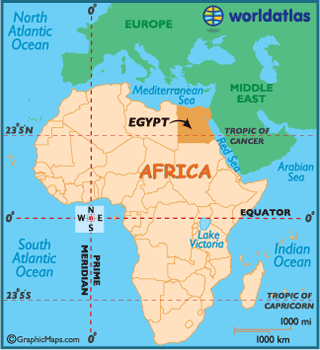
Egypt is not landlocked. Though most countries that suffer from the landlocked trap are in Africa, Egypt happens to be located on the coast, making it able to take advantage of the Mediterranean Sea and Red Sea. Coastal access is vital for a country, as it links the country to strong trade routes. This allows Egypt to trade more easily with other countries and maintain a steady flow of imports and exports. For this reason, the income Egypt gains from coastal trade helps keep the country out of poverty as well as prevents them from having to rely on their neighbors.
Additionally, Egypt is not greatly affected by the natural resource trap. Though Egypt is commonly thought of for its abundance of crude oil and petroleum products and exports a considerable amount of this yearly, Egypt seems hardly phased. Why? Well, Collier notes that the more natural resources a country has, the more competition and selectivity there is. Also, a country could then be controlled solely by a specific natural resource and all its other resources will become hardly competitive. However, with Egypt's location near sea trade routes, the transportation and exposure of Egypt's goods are greater than usual, so it seems that Egypt then doesn't have a problem with transporting its goods evenly. Not being landlocked clearly helps with this.
Conflict, in general, is a trap that most countries inevitably fall into. Egypt currently faces some internal conflict, for example the uprisings regarding the new Egyptian Constitution, and that naturally distracts Egypt's government and citizens from keeping peace and focusing on other crucial aspects of society. However, though conflict may sometimes be a trap for Egypt, bad governance is the trap Egypt mainly falls into.
In 2011, people from around the world watched as Egypt protested the rule of Hosni Mubarak. The 2011-2012 Egyptian Revolutions indicated that Egyptians had been battling bad governance and had finally bursted. These revolutions also indicated that Egypt had finally solidified in their minds what exact image represented a president for them. For example, Egyptians fought for free elections, freedom of speech, legitimacy and the end of emergency law. That is what they wanted and expected to see. Now, this image resonates even today with the new presidency in Egypt, as can be seen in the uprisings against Morsi regarding his declared rights regarding the Constitution drafting, as mentioned before.
Though Egypt is heading in a better direction with its government, "bad governance" is arguably its most prominent trap. A corrupt and uncooperative government prevented Egypt from progressing with the rest of the world, leaving it with a lot of "cleaning up to do" after Mubarak was ousted. Additionally, constant uprisings and a lack of confidence in the government proves to be detrimental to the economy, as less people will invest their money into the well-being of the country. Also, the uprisings in Egypt were violent and teared apart the overall stability and peace in the country. This trap though, did help Egyptian citizens consider their image and their President's image, which in the long run, will potentially bring about positive change.
Could these new changes in Egypt rid the country of the bad governance trap? I suppose only time will tell...
Firstly, Egypt is not considered to be in the bottom billion. However, that doesn't mean Egypt hasn't or doesn't deal with any of the traps Collier mentions. Let's start, though, with the traps Egypt does not deal with and how that affects Egypt's well-being.
Egypt is not landlocked. Though most countries that suffer from the landlocked trap are in Africa, Egypt happens to be located on the coast, making it able to take advantage of the Mediterranean Sea and Red Sea. Coastal access is vital for a country, as it links the country to strong trade routes. This allows Egypt to trade more easily with other countries and maintain a steady flow of imports and exports. For this reason, the income Egypt gains from coastal trade helps keep the country out of poverty as well as prevents them from having to rely on their neighbors.
Additionally, Egypt is not greatly affected by the natural resource trap. Though Egypt is commonly thought of for its abundance of crude oil and petroleum products and exports a considerable amount of this yearly, Egypt seems hardly phased. Why? Well, Collier notes that the more natural resources a country has, the more competition and selectivity there is. Also, a country could then be controlled solely by a specific natural resource and all its other resources will become hardly competitive. However, with Egypt's location near sea trade routes, the transportation and exposure of Egypt's goods are greater than usual, so it seems that Egypt then doesn't have a problem with transporting its goods evenly. Not being landlocked clearly helps with this.
Conflict, in general, is a trap that most countries inevitably fall into. Egypt currently faces some internal conflict, for example the uprisings regarding the new Egyptian Constitution, and that naturally distracts Egypt's government and citizens from keeping peace and focusing on other crucial aspects of society. However, though conflict may sometimes be a trap for Egypt, bad governance is the trap Egypt mainly falls into.
In 2011, people from around the world watched as Egypt protested the rule of Hosni Mubarak. The 2011-2012 Egyptian Revolutions indicated that Egyptians had been battling bad governance and had finally bursted. These revolutions also indicated that Egypt had finally solidified in their minds what exact image represented a president for them. For example, Egyptians fought for free elections, freedom of speech, legitimacy and the end of emergency law. That is what they wanted and expected to see. Now, this image resonates even today with the new presidency in Egypt, as can be seen in the uprisings against Morsi regarding his declared rights regarding the Constitution drafting, as mentioned before.
Though Egypt is heading in a better direction with its government, "bad governance" is arguably its most prominent trap. A corrupt and uncooperative government prevented Egypt from progressing with the rest of the world, leaving it with a lot of "cleaning up to do" after Mubarak was ousted. Additionally, constant uprisings and a lack of confidence in the government proves to be detrimental to the economy, as less people will invest their money into the well-being of the country. Also, the uprisings in Egypt were violent and teared apart the overall stability and peace in the country. This trap though, did help Egyptian citizens consider their image and their President's image, which in the long run, will potentially bring about positive change.
Could these new changes in Egypt rid the country of the bad governance trap? I suppose only time will tell...
Subscribe to:
Posts (Atom)